Showing posts with label therapy. Show all posts

Surgery patients hear benefits of music therapy loud and clear

By Carina Storrs

(CNN) It is no secret the uplifting effect of music, whether you like Mozart or Metallica. A growing amount of evidence also suggests that clinicians can use the power of music to help people recover from surgery and other medical procedures.
Studies have found that listening to music before surgery can reduce anxiety, and may also reduce the need for sedatives. Listening to music after surgery, and even during, may ease pain and the need for pain meds. Hospitals seem to be taking notice.
"I think more hospitals will start offering music therapy as the research foundation is growing, and there has been good research," said Al Bumanis, a music therapist and spokesperson for the American Music Therapy Association. There are probably about a thousand hospitals, maybe fewer, that are currently offering this type of therapy in the U.S., he said.

What is music therapy?

The basic definition of music therapy is the use of music for non-musical treatment goals, Bumanis said. And technically speaking, it has to be carried out by a trained music therapist.
In a typical session, which lasts 45 minutes to an hour, a therapist plays either recorded or live music that they think the patient will like. "I ask patients if there is something that reminds them of high school," said Leah Oswanski, a music therapist who works with cancer patients before and after surgery...
Get the full story at CNN.
http://www.cnn.com/2015/08/13/health/music-therapy-surgery-patients/index.html

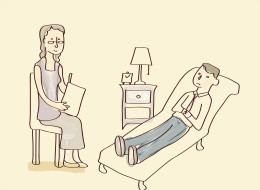
6 Things You Can Say to Support Someone Who's Depressed


By Jean Kim M.D.

My recent blog post focused on what not to say to a depressed person. I presented common statements that people tell friends and loved ones in an attempt to alleviate the depressed person’s discomfort, but more so their own unease in the face of a difficult, heart-wrenching situation. Unwittingly or not, statements that put blame on a depressed person’s willpower, lack of motivation, or negative mindframe often backfire and increase that person’s feelings of isolation and hopelessness. The statements sometimes come from a fundamental misunderstanding of the depression illness. It is a biopsychosocial condition that traps its victims in a circuitous broken-record mindset that creates vulnerable, despondent thinking patterns.
So how can well-meaning people provide support to someone with depression, aside from avoiding tendencies towards judgment? How can one show empathy and understanding? Here are 6 things to say to connect with someone living with depression: 
1. "I’m here for you."
Just offering to be there for someone with depression helps. Someone who feels trapped in a cycle of self-loathing often feels unworthy of reaching out to people around them. They often worry about being a burden or nuisance to others, since they are aware of how infectious their mood can be for those nearby. When you decide to let them know you will be there for them, regardless of their fears of judgment or of wasting your time, they can feel less alone and feel less social pressure. You don’t even have to necessarily say anything to them while you're with them. This can help put a crack in the cycle of negative self-worth and enable them to realize people still care regardless of their sad outward presentation.
2. "What can I do to help?"
Depressed people may not necessarily be in a state of mind to know or say what will help them, but just hearing someone's willingness and openness can help lift their spirits. Even if they say nothing needs to be done, they have heard you. They can sense that you care, and that can reassure them when they're caught in guilt-ridden thinking. If they do request something, you’re in a great position to help. Even just being there to listen to their worries can help.
3. "I like [X/Y/Z] about you."
Low self-esteem becomes a self-fulfilling prophecy with depression. It leads to feeling misunderstood and out of sync with everyone else. Depressed individuals often mentally beat themselves up. Hearing positive reinforcement can help soften their self-berating tendencies and test the reality of their thoughts. Do not offer fake praise, but share honest reasons why you enjoy the person’s company or love them. Often their mood skews their perception of their lovability...
Get the full list at Psychology Today.
https://www.psychologytoday.com/blog/culture-shrink/201507/6-things-you-can-say-support-someone-whos-depressed

10 Therapy Myths That Are Just Totally WRONG (As Written By A Therapist)

By Danielle Adinolfi
There are a lot of myths about therapy that stop people from going in for a session.
Here are 10 of the most common therapy myths -- and the truth! -- straight from the mouth of a therapist:
1. Only Crazy People Go To Therapy
Most clients are ordinary, everyday people with typical problems. Things like the loss of a loved one, a break-up, or a relationship rut are common issues addressed in therapy.
Most people will go through difficult times, and therapy will help the people involved gain better insight on their issue.
2. Only Couples On The Verge Of Breakup Go To Therapy
Some couples find it helpful to have regular relationship check-ups to ensure things are working properly in their relationship. In fact, the happiest couples go in and out of therapy sessions all the time.
A lot of the work we love to do in therapy is preventative measures to help individuals work together efficiently and successfully for the long-term.
These types of session strengthen couples that are currently in a good place and hope to remain there by addressing small issues that have the potential to grow if left untreated.
3. Once You Start Therapy, You Are In For Life
Some people come for three sessions, others come for three years, but one thing is for sure: The client determines the length of therapy, NOT the therapist. (Some people choose to stay in therapy long-term that is because it makes them feel good when they make positive changes in their lives.)
Remember, therapy is a choice that can put you and your partner on the path to a greater understanding of yourselves as individuals and as a couple.
4. Couples Therapy Will Only Make Our Relationship Worse
When a couple seeks treatment, a therapist sees two possible end results for them -- staying together or amicably separating. But the clients are the ones who make that decision.
If both partners want to better their relationship, then the end goal is obvious and the work done in therapy will help alleviate some of the current issues they face.
This is where they can bring up things in a safe space and at a time when both people are ready to address whatever issues (known or unknown) are plaguing them.
5. In Couples Therapy, Therapists Side With The Partner Who Acts Like The Victim
This is a common misconception that is absolutely UNTRUE. Every therapist understands that nothing happens in a vacuum -- each partner plays an equal role in every issue.
So when one person is blaming the other, we do our best to help both partners see how they are contributing to the problem and recognize that one person is never completely at fault.
Read the full list at Huffpost Healthy Living.
http://www.huffingtonpost.com/yourtango/therapy-myths_b_7637096.html

8 Signs You NEED To See A Therapist

By Huffington Post on February 16, 2014
Everyone experiences periods of stress, sadness, grief and conflict, so when you’re feeling off it can be hard to know if it’s time to see a professional about the problem. And apparently, those who would benefit from some therapeutic intervention are not seeking it enough: While one in five American adults suffer from some form of mental illness, only about 46-65 percent with moderate-to-severe impairment are in treatment, according to the Substance Abuse and Mental Health Services Administration.
And while identifying and managing diagnosable mental illness is a priority in the psychiatric community, psychological help for those without a clear condition to manage can be just as important. Aside from suffering needlessly, those in distress may actually make the problem worse by avoiding professional help.
“The earlier someone gets help, the easier it is to get through the problem,” says psychologist Daniel J. Reidenberg. “There will be less time and less strain and stress involved in that.”
Psychologists attribute this low rate of treatment to the stigma and many myths attached to seeing a therapist. Among them, the concern that only “crazy” people need therapy or that accepting help is a sign of weakness or that the treatment options will be time-consuming and expensive. These are not true, says psychologist Mary Alvord, Ph.D.
“Your treatment doesn’t have to be analysis four times a week; I have some patients who come for just two session consultations or for a cognitive behavioral therapy for a year,” she says. “People feel like they’ll get stuck and that’s just not true.”
And while treatment can be very expensive and is not always covered on par with other medical treatment in most health insurance plans, there are cheaper options out there, including many university-associated treatment centers and therapists who will charge on a scale of affordability.
“There is still an unjustified stigma around mental illnesses, but we’re not even talking about mental illness,” says Reidenberg. “We’re just talking about life and how hard life can be. The benefits of pscyhotherapy [can be viewed] more like stress-relievers like exercising and eating right — just strategies that help make life easier and help to remove stressors.”
So what are some signs it might be time to set up an appointment? We asked Reidenberg, Alvord and psychogist Dorothea Lack to reveal some indicators we can all look for during times we’re feeling low. The biggest takeaway? It’s simply a question of measuring to what extent you can manage — anything that makes you feel overwhelmed or limits your ability to function is fair game for a therapist, social worker or psychologist.
Read the full list at the Trent Online 
(http://thetrentonline.com/8-signs-need-see-therapist/)

A Primal Look at Art Therapy

A few years ago as I was beginning to get a vision for what would become The Primal Connection, I was exploring the idea of vitality from new angles. I was interested in what lay beyond the basics for human survival: nutritionmovement and fitnesssleepstress and sun. I wanted to examine the connections between our hunter-gatherer ancestors’ lifestyles (what we can reasonably determine and presume) and the existing (if somewhat marginal) activities and therapies that appeared to show therapeutic benefit in scientific studies. I talked about bibliotherapywriting therapymusic therapy as well as other more enigmatic but relevant topics like silencesolituderitual and retreat. What could be gleaned from the research (and a bit of Primal philosophizing) for further refining the good life – the deeper sense of well-being that accesses and actualizes the many facets of our evolutionarily fashioned humanity? In the midst of my recent blogging forays into vegetable recommendationsgentle cookingpollution mitigation and resistant starch, I’ve been thinking lately about those past explorations. Truth be told, looking into those areas influenced my life at the time. I’m one to write about what I live – or at very least try what I write about….
Recently, another one of those intriguing intersections between evolutionary activity and modern creative therapy has been on my mind. It’s one of those situations where you encounter something and suddenly you keep running into it. A friend’s mother is in hospice care and has her best days during the art therapist’s visits. A work associate talked about doing art therapy before the birth of her second child to release lingering tension from a traumatic first childbirth. Another friend’s child does art therapy in counseling sessions around family transition. I run into articles about art therapy for recent combat veterans and for women with breast cancer. It makes me stop and wonder. What is it about art that gets to the depths of our experience – often when other “normal” approaches fail? And what does (or should) this mean for everyday Primal life?


Read the full article at Marks Daily Apple


(http://www.marksdailyapple.com/art-therapy/#ixzz2tufO5qV6)

A brief history of cognitive behavioural therapy [part 1]

First part of a brief history of cognitive behavioural therapy, focussing on the role of psychoanalysis in setting the scene for the emergence of CBT.

Posted By

sometimes explode
Feb 18 2014 08:24
Part One: Psychoanalysis & war
There are no panaceas in mental health. There is not a single mental health professional who will disagree with that statement. For some this is because there are and can be no magic bullets, for others it is because those magic bullets have yet to be found. While people like Joana Moncrieff [1] do great work on showing how psychiatric drugs don’t treat mental illness, and others like David Healey [2] and Robert Whitaker [3] continue to reveal how long-term psychopharmacological therapies do significant harm, still more have shifted their hopes to other territories. Among these territories is the resurgence in the field of talk therapies. Service-users themselves regularly call for better access to these therapies, rightly looking to them as less restrictive forms of treatment. But the thirst for a panacea merely displaces itself from drugs to talk and does so in such a way that it seems to answer the call from service-users. The consumer has spoken: long live CBT!
Cognitive behavioural therapy has become the dominant form of psychotherapy in our society, displacing psychoanalysis as the way of understanding the psychopathology of everyday life. Today, CBT is recommended for almost every psychologically codified ill, from mild depression to schizophrenia, and it has fast become a linchpin in the UK’s early intervention strategy (alongside neuroleptics) in managing first episodes of psychosis in young people. Just as psychoanalysis was once regarded as a self-sustaining industry, so CBT has now become a thorough psych-factory churning out thousands of qualified practitioners. While psychoanalysis could only be performed by psychoanalysts, a variety of subject-groups are trained in CBT including GPs, nurses, psychiatrists and social workers. Unlike most other forms of psychotherapy, everybody in the UK can get at least 6 sessions of CBT entirely free on the NHS. All of this sounds welcome, and up to a point it is; but just like its predecessors in psychotherapy and the drugs it complements and increasingly replaces, CBT is far from an entirely neutral tool being wielded in the patient-consumer’s best interest. To understand what CBT is we first have to look to those earlier forms of therapy that form part of its ontogenesis.
Read the full article at Libcom
(http://libcom.org/blog/brief-history-cognitive-behavioural-therapy-part-1-18022014)


SPORK! Similar Picks:

When Less is More: Cognitive Behavior Therapy vs Psychoanalysis for Bulimia

By James Coyne PhD
Posted: 

Twenty sessions of cognitive behavior therapy over 5 months reducedbinge eating and purgingbetter than 2 years of weekly psychoanalytic psychotherapy. This was true for assessments both at five months (42% versus 6%), marking the ending the cognitive behavior therapy (CBT), and two years (45% versus 16%), marking the ending of the psychoanalytic psychotherapy. Overall, psychoanalytic psychotherapy did not do well, despite the greater intensity of treatment.

Read the full article at Plos
(http://blogs.plos.org/mindthebrain/2014/01/07/less-cognitive-behavior-therapy-vs-psychoanalysis-bulimia/)

Tips on Coping with Anxiety and Bipolar Disorder


I’m pretty sure I have an anxiety disorder. It’s never been diagnosed and I’ve never talked about it, but I’m pretty sure it’s there. I meet the criteria for an anxiety disorder and it sure the heck feels like the right diagnosis.
It wouldn’t be altogether shocking if this were the case as anxiety disorders are the most common mental illness. Comorbid disorders with bipolar disorder are the rule rather than the exception.
But as I’ve said, I’ve never been diagnosed or treated for an anxiety disorder. (This is a case of do as I say, not as I do. If you think you have a disorder, you should be professionally diagnosed and treated.) Here’s how I deal with the anxiety I experience...
Read the full article at Healthy Place 
(http://www.healthyplace.com/blogs/breakingbipolar/2013/11/coping-anxiety-bipolar-disorder/)

The value of art therapy for those on the autism spectrum


by Kate Lacour, ATR-BC

Autism rates are on the rise, and new treatments, such as art therapy, are emerging to meet the pervasive challenges it presents. Many parents look to art to help their child.

In recent years, autism has been featured frequently in the news, and it seems that everyone knows someone whose life has been touched by the condition. What is autism and how is it treated? Autism is a neurological condition present at birth, whose precise cause is as yet unknown. The symptoms of autism include repetitive or compulsive behaviors, social impairment, problems with communication and trouble processing sensory information (such as hypersensitivity to sounds). The most popular treatment is behavior modification therapy, which aims at shaping behaviors through a system of rewards and consequences. In recent years, caregivers seeking alternative or complimentary treatments have a broader range of options available. One such treatment is art therapy.

Broadly speaking, art therapy promotes mental and emotional growth through art making. Unlike art instruction, art therapy is conducted with the aim of building life skills, addressing deficits and problem behaviors, and promoting healthy self-expression. Clients are encouraged to explore and express themselves using art materials; crafting attractive artwork is not the goal (though it may be a happy by-product).

Read the full article at the Art Of Autism 

(http://the-art-of-autism.com/the-value-of-art-therapy-for-those-on-the-autism-spectrum/)

The Benefits of Music Therapy for Autism

Posted by  on Mar 4, 2013

A professional who specializes in autism can suggest different treatment for autistic's that can have a significant positive effect on their behavior. One such treatment is Music therapy. 

Music therapy is a controlled music experience that is used to facilitate positive change in human behavior. Each session of music therapy is carefully planned, carried out, and evaluated to suit the specific needs of each patient. Music therapy can include any of the following musical activities: 

o Listening to music and/or musical creation 
o Playing musical instruments (any instrument can be used) 
o Moving to music 
o Singing 

As far as autism is concerned, studies have shown that music therapy has a significant, positive influence when used to treat autistic individuals. Participating in music therapy allows autistics the opportunity to experience non-threatening outside stimulation, as they don't engage in direct human contact. 

Read the full article at the Piano Wizard Academy 

(http://www.pianowizardacademy.com/blog/music-therapy/the-benefits-of-music-therapy-for-autism/)