Showing posts with label health care. Show all posts

Medical Privacy Under Threat in the Age of Big Data

By Farai Chideya

“I didn’t understand the issue of medical privacy. It sounded abstract,” says Deanna Fei, author of the new book Girl in Glass, which covers the premature birth of her daughter Mila and an ensuing storm over medical privacy and ethics. Now she says firmly, “This is an issue of civil rights and social justice. Without the right to medical privacy, ordinary Americans can’t keep information from being used against them.”
Fei’s most intimate story is now public knowledge. A recap: When she went into labor after only five and a half months of pregnancy, she didn’t know if her baby would live or die. She was in pain, bleeding, rushing in a cab to the hospital; and, later, she was staring at the bruised skin of her less than 2-pound daughter, who was too fragile to touch. As baby Mila grew into a healthy one-year-old, a new blow fell. The CEO of AOL, Tim Armstrong, blamed a forthcoming benefits cut on the costs of two “distressed babies” born to employees. One of the employees was Fei’s husband, whose insurance covered the family. People at work started asking him if the comments referred to his family. So Fei decided to speak out. “When I came forward, we were afraid. I was speaking out against my husband’s boss, who runs a powerful company,” she says. “But I just felt it was imperative to speak up to defend my daughter’s basic humanity. I also came to see that to single out any individual for their expenditures undermines the principle of health insurance.” After an uproar, Armstrong quickly apologized and reversed his decision on benefits.
But the episode underscored just how insufficient the existing protections are for individual privacy in the medical realm. Under the Health Insurance Portability and Accountability Act (HIPAA), it’s illegal for health plans and some other entities to reveal medical information about those insured or treated. CEO Armstrong didn’t name names … but they were easily deduced by many employees. If AOL self-insures (which as a large corporation it’s likely to, but will not publicly confirm), then it is considered a health care provider subject to HIPAA. Many medical and legal experts considered Armstrong’s action unethical and possibly a violation of existing medical privacy law. The Office for Civil Rights at the Department of Health and Human Services, which is in charge of investigating violations, would only say, “As a matter of policy, the Office for Civil Rights does not release information about current or potential investigations.”
Medical privacy is a high-stakes game, in both human and financial terms, given the growing multibillion-dollar legal market for anonymized medical data. IMS Health Holdings, for example, acquires data from pharmacies and sells it to biotech and pharmaceutical firms. After looking into its filing to become a public company, ProPublica found IMS’s “revenues in 2012 reached $2.4 billion, about 60 percent of it from selling such information.” Medical data-mining firms claim that this is all harmless because the data is truly anonymous, but their case is not airtight by any means. For example, Latanya Sweeney of Harvard’s Data Privacy Lab bought commercially available data and de-anonymized it by cross-referencing the dates of medical events with local news events and public records. She found that a man publicly identified as a missing person was diagnosed with pancreatic cancer and had attempted suicide, for example. A few of the people she identified chose to speak publicly, including retired Vietnam veteran Ray Boylston, who had his bladder removed after a severe motorcycle crash. “I feel I’ve been violated,” he told Bloomberg Businessweek.
There’s also the risk that medical records will be breached by hackers, or in some cases, by workers manually printing files. When Greg Virgin, CEO of the security firm RedJack, gave NPR a “tour” of sites selling stolen data, he found a bundle of 10 Medicare numbers selling for 22 bitcoin, or $4,700 at the time. General medical records sell for several times the amount that a stolen credit card number or a social security number alone does. The detailed level of information in medical records is valuable because it can stand up to even heightened security challenges used to verify identity; in some cases, the information is used to file false claims with insurers or even order drugs or medical equipment. Many of the biggest data breaches of late, from Anthem to the federal Office of Personnel Management, have seized health care records as the prize...
Get the full story at The Intercept.
https://firstlook.org/theintercept/2015/08/06/how-medical-privacy-laws-leave-patient-data-exposed/

'We blame the sick for being expensive': the mother whose baby cost AOL $1m

By Jana Kasperkevic

Deanna Fei is not a healthcare expert. She is also not a privacy expert. According to her, she is just a mom – a mom forced to defend the decision to save her daughter’s life.
Fei came into the spotlight in February 2014 when Tim Armstrong, AOL’s CEO, sparked an nationwide debate about healthcare and privacy when he told employees that he was cutting their retirement benefits because of Obamacare and costs associated with two “distressed babies” born to the tech company’s employees. One of those babies was Fei’s.
Now the novelist is telling her story in a new book and hoping to shine a light on the complex and frightening intersection between health, privacy and insurance.
Mila was born nearly four months premature in October 2012. Afterward Fei and her husband Peter Goodman, then an editor at AOL, had a hard time connecting with people, Fei said. She spent months living in fear that her daughter, who was on life support, was not going to make it. In addition to worry and fear, there were also shame and guilt. Was she a bad mother? Was this her fault? Did she do something to make this happen? Should she have done something differently?
When Armstrong called her daughter “a distressed baby” and “put a price tag on her life” – $1m to be precise – he forced Fei to take a step back and say: “Why have I been judging her and myself so harshly all the time? This is something that happens,” she said.
Sitting in her stroller last month as her mother pushed her through Brooklyn’s Prospect Heights, Mila looked anything but distressed. “UPS truck!” she yelled as one of the delivery company’s brown trucks came into view. The brown truck is a familiar sight, often delivering packages ordered by Fei. Her brother Leo, who is three and a half, rode in circles around her and their mom on his scooter.
“They kind of rule our days,” said Fei, describing Mila as fierce. “Every day is a blessing.”
Girl in Glass
 Deanna Fei’s book, Girl in Glass. Photograph: Courtesy of Deanna Fei
Mila is the main subject of Fei’s forthcoming book Girl in Glass, which tells the story of Mila’s birth and survival. The book, which comes out on 14 July, concentrates on the family’s struggle to save their fragile child and on the enormous challenges people face when their healthcare needs clash with the companies providing them.
“This feeling is common in American society now, where everyone kind of feels squeezed financially in one way or another. It’s very easy to feel that it’s always a zero sum game,” said Fei. “That’s how it is for 99% of us – you know, the not-Tim Armstrongs of the world.”
In his remarks, Armstrong made it seem that the company had no other choice than to change its 401(k) retirement plan after care for two premature babies cost company more than it expected in healthcare costs.
In the early 2014, he said:
Two things that happened in 2012. We had two AOL-ers that had distressed babies that were born that we paid a million dollars each to make sure those babies were OK in general. And those are the things that add up into our benefits cost. So when we had the final decision about what benefits to cut because of the increased healthcare costs, we made the decision, and I made the decision, to basically change the 401(k) plan.
While Fei’s family was not mentioned by name, it was easily identified as there were not many families with premature newborns. That, according to Deborah Peel, constitutes a violation of the Health Insurance Portability and Accountability Act (HIPAA) of 1996. Peel, a physician, is the founder and board member of Patient Privacy Rights, a foundation with a mission to restore patient control over personal health information...
Get the full story at The Guardian.

http://www.theguardian.com/us-news/2015/jul/04/deanna-fei-aol-distressed-baby-healthcare-privacy

Researchers identify the single epigenetic mutation which causes autism

By Michelle Peterson

Last December, researchers identified more than 1,000 gene mutations in individuals with autism, however, it was still unclear as to how these mutations increased the risk for autism. Now, UNC School of Medicine researchers are the first to show how one of these mutations disables a molecular switch in one of these genes and causes autism.  The opensource study is published in the journal Cell.
Previous studies shows that an enzyme called UBE3A can be switched off when a phosphate molecule is tacked onto UBE3A. In neurons and during normal brain development, this switch can be turned off and on, leading to tight regulation of UBE3A. However, the current study found that an autism-linked mutation destroys this regulatory switch. The data findings show that destruction of the switch creates an enzyme that cannot be turned off. As a result, UBE3A becomes hyperactive and drives abnormal brain development and autism.  The current study used human cell lines, as well as mouse models...
Read more at Health Innovations.
http://health-innovations.org/2015/08/07/researchers-identify-the-single-epigenetic-mutation-which-causes-autism/

Pass the time in your room alone: On music and mental health

By James Cassar

In seventh grade, I was enrolled in a music composition class. Every Friday, students were allowed to bring in a CD and lyric sheets to share with the rest of the room to discuss and analyze a chosen song. Because my favorite band was Blink-182 shortly before it was my turn, I opted to showcase “Adam’s Song” to my fellow classmates. I never had the chance to actually do so, however, because after printing 20 copies of the lyrics, which tell a tale of suicide and depression, an administrator ushered me into their office and asked me if my decision to bring this track into my very small, very sheltered middle school was an attempt to express my own struggles with mental health.
I hadn’t really considered the definition of “mental health” before this incident, perhaps because I was more concerned with my own physical health at that point trying countless physical therapy methods to combat cerebral palsy. As I grew older and my love of music became more important to me, I came to understand that one’s mental health and one’s favorite songs could work together as a coping mechanism or loudspeaker for one’s own personal battles. I’m not alone in this mindset, even though those that share my viewpoint realize that the music industry needs to adapt if fans are ever going to talk about mental health openly.
“There's a constant dialogue of mental health in my lyrics. Since I started writing songs, I've used it as a cathartic release for my anger, depression and, rarely, joy,” Antarctigo Vespucci co-frontman Chris Farren explains. “I'm grateful to be able to do it for a living because I'm constantly forced to face my own faults and not become complacent in my emotions.”
Before founding his current project with former Bomb the Music Industry! founder Jeff Rosenstock, he turned a band name he came up with at 16, Fake Problems, into a celebrated, if underrated, rock outfit. “At the time, I felt misunderstood and like an outcast. I had all of these songs about my feelings and I felt ashamed of that, so in a self-deprecating precautionary move I labeled the project Fake Problems. In my head it kind of took away the power from anyone who wanted to make fun of me for expressing myself.”
While that group seems to be on an extended break, the Florida-based songwriter still continues his mission to articulate his own mental health, through therapy or a musical outlet. Last holiday season, proceeds from his digital-only Christmas album Like A Gift From God Or Whatever were forwarded to the National Alliance on Mental Illness (NAMI), The decision to transform a ridiculous solo endeavor into a charitable venture came from the desire to expand his understanding of the larger world he teases in his songwriting. As he elaborates, “I've struggled with anxiety and depression for a few years now…but I wanted to know more beyond my own experience. I wanted to align myself with an organization that would help me do that, or force me to do that, really.”
The nationwide touring cycles and constant buzz surrounding Boston indie quartet Somos forced vocalist and bassist Michael Fiorentino to confront mental health in a way that alerted fans and media outlets alike. Earlier this year, he revealed his struggles with depression and anxiety and announced Somos would cancel a series of dates supporting the emo-rock band Dads. “The break of several months between our first national tour with Modern Baseball [in winter 2014] and [this spring’s] Tigers Jaw tour provided us with much-needed time to recharge. In a very basic sense, I used that time to start seeking treatment. If we had gone on the Dads tour, I think the band would have imploded by the end of it.” For someone who ended the explosive Temple Of Plenty with a rallying cry (“Repair, it’s what urgently needed, young man”), it’s a far more resounding statement to follow through on one’s own advice.
For acts anticipating loaded show schedules, Christian Holden, vocalist and bassist of the Hotelier, believes in the importance of self-care. “Touring kind of destroys your body, so exercising and not eating $500 worth of Taco Bell is a good start. Taking care of your body is like good practice of self-care in general. But also, forgiving yourself for not taking care of your body works, too.” This steady balance of learning to put one’s self first––and understanding when snags occur in that routine––are part of a larger reminder, to “make sure [someone is] being self-determined and empowered” whenever that seems possible and safe.
The issue of safety can be applied to musical situations which call for physical comfort (see my last column on accessibility at Warped Tour), but also those which require emotional and mental well-being. For Judy Hong, operating Quiet Year Records in a localized, DIY-minded hub in central Virginia has underlined the need for safe spaces which respect the entire spectrum of personal pathways which intersect in any growing arts community. “Imagine you’re in a climate where you feel unsafe, or that you’re not going to be heard or that you’re alone. There’s no foundation, support or care there. We create the scene that we want to be a part of, which means that confronting things like low self-esteem, self-hatred, body image issues and even race, class and privilege needs to happen; they’re part of the wider world we live in. When people come together and make things more equal…they’re changing the way that things can be talked about when you do things compassionately and out of love.” While mental health and maintaining self-care is by definition an individual journey, Hong believes better understanding of this human experience needs to be achieved in these larger, music-driven groups. “It’s weird … because no one likes to talk to one another about their feelings or confront their friends or have to experience negative emotions because there’s no script for it … I feel like those that need to scrape by with their music need to scrape hard, so everyone just needs to look out for each other.” The upstart label owner also hints at a concept that, even as a person with a fair deal of knowledge about disability culture, I was unfamiliar with: structural disability. Buildings that tend to have features which can be overwhelming for those with physical disabilities, such as a doorway that isn’t wide enough to accommodate a wheelchair, are structurally disabled...
Get the full story at Alternative Press.
http://www.altpress.com/features/entry/tomorrow_holds_such_better_days_on_music_and_mental_health

5 Things a Prenatal Test May Not Tell You About Your Baby

By Melanie Gomez

This wasn’t the first time I found myself comforting a pregnant momma whose doctors have diagnosed a problem with her unborn child. Prenatal tests indicated her child to be imperfect and that termination would be in the family’s best interest. I’ve experienced these conversations before. The doctor will provide all of the medical and cognitive complications that will very likely be present at birth.
I have no issue with doctors presenting the facts to parents so they can make an informed decision. Families make these impossible decisions every day. My only issue is that doctors can’t inform any parent completely. Their prognosis can leave out extremely important factors parents should know.
I have the privilege of knowing several children whose parents were given that same advice. These children have undergone multiple surgeries, and their families have faced many challenges to keep their children’s lives going, literally and figuratively. Those parents and their sweet children, along with my own, testify to the “facts” of being a special needs family that a medical prediction doesn’t include.
For the benefit of my sweet friend who is now facing this decision, I’ve compiled an incomplete list of things your child’s diagnosis may not tell you:
1. A child with special needs can change your life for the better.
You can discover places in your heart you never knew existed. They’re like untapped fountains that can only be opened by a child with special needs. I know special needs parents who have found their life’s calling wrapped up in this journey.
2. A child with special needs can unleash the fighter inside you that you never knew existed.
You can become stronger, more fierce and every area of your life will be affected forever. You can attain a new level of toughness and resiliency...
Get the full list at The Mighty.
http://themighty.com/2015/08/5-things-a-prenatal-test-may-not-tell-you-about-your-baby/

Young adults with autism show improved social function following UCLA skills program

UNIVERSITY OF CALIFORNIA - LOS ANGELES
Researchers at the Semel Institute for Neuroscience and Human Behavior at UCLA have found that a social skills program for high-functioning young adults with autism spectrum disorder significantly improved the participants' ability to engage with their peers.
In the study, the largest randomized controlled trial to show improved social functioning in young adults with autism, the participants' advances continued to be seen 16 weeks after the program's conclusion, and were even augmented by other improvements such as increased empathy and greater responsibility.
The study (PDF), which builds on previous findings showing the effectiveness of UCLA's Program for the Education and Enrichment of Relational Skills, or PEERS, appears in a special issue of the online Journal of Autism and Developmental Disorders.
"There is still a misconception that autism is a childhood disorder," said Elizabeth Laugeson, the founder and director of the UCLA PEERS Clinic, an assistant clinical professor of psychiatry at the UCLA Semel Institute and the study's principal investigator. "It's as if we've forgotten that these children grow up to be adults with their own unique challenges that very often affect their ability to be gainfully employed or establish meaningful friendships and romantic relationships.
"Our study offers encouraging findings that, through an evidence-based, caregiver-supported intervention, adults with autism can improve in ways that may help them be more successful in these aspects of their lives."
Autism affects approximately 1.5 million people in the U.S., and the number of young adults identified with the disorder is rising every year. Although individuals of all ages on the autism spectrum struggle as a result of social deficits, most interventions target young children; few programs are available to help young adults improve their social functioning.
"Unfortunately, research investigating the effectiveness of social skills training has fallen short for young adults with autism," Laugeson said. "In fact, very few social skills interventions exist for young adults on the spectrum, and apart from PEERS, none has been shown through research to be effective."
Laugeson and her colleagues, including Dr. Fred Frankel, a UCLA professor of psychiatry, developed PEERS at UCLA in 2005 and it has since expanded to other sites in the U.S. and other countries. The PEERS for Young Adults intervention consists of 16 weekly 90-minute sessions, along with concurrent sessions for caregivers.
"We're not teaching what we think young people should do in social situations, but what we know actually works through research," Laugeson said...
Read more about the study at EurekAlert!
http://www.eurekalert.org/pub_releases/2015-07/uoc--yaw073015.php

Babies On Display: When A Hospital Couldn't Save Them, A Sideshow Did

By NPR Staff

Close to a century ago, New York's Coney Island was famed for its sideshows. Loud-lettered signs crowded the island's attractions, crowing over tattooed ladies, sword swallowers — and even an exhibition of tiny babies.
The babies were premature infants kept alive in incubators pioneered by Dr. Martin Couney. The medical establishment had rejected his incubators, but Couney didn't give up on his aims. Each summer for 40 years, he funded his work by displaying the babies and charging admission — 25 cents to see the show.
In turn, parents didn't have to pay for the medical care, and many children survived who never would've had a chance otherwise.
Lucille Horn was one of them. Born in 1920, she, too, ended up in an incubator on Coney Island.
"My father said I was so tiny, he could hold me in his hand," she tells her own daughter, Barbara, on a visit with StoryCorps in Long Island, N.Y. "I think I was only about 2 pounds, and I couldn't live on my own. I was too weak to survive."
She'd been born a twin, but her twin died at birth. And the hospital didn't show much hope for her, either: The staff said they didn't have a place for her; they told her father that there wasn't a chance in hell that she'd live.
"They didn't have any help for me at all," Horn says. "It was just: You die because you didn't belong in the world."
But her father refused to accept that for a final answer. He grabbed a blanket to wrap her in, hailed a taxicab and took her to Coney Island — and to Dr. Couney's infant exhibit...
Get the full story at NPR.
http://www.npr.org/2015/07/10/421239869/babies-on-display-when-a-hospital-couldnt-save-them-a-sideshow-did?utm_source=facebook.com&utm_medium=social&utm_campaign=npr&utm_term=nprnews&utm_content=20150710

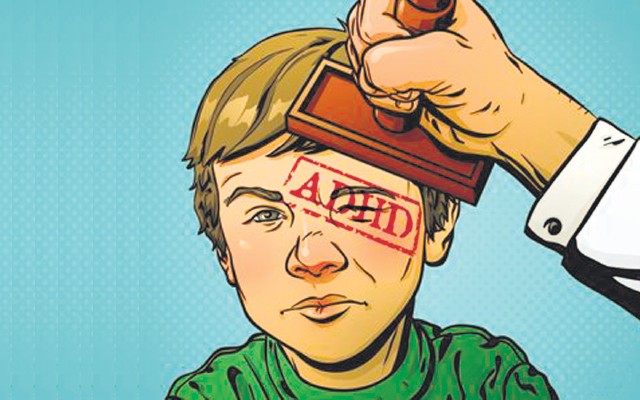
ADHD: Psychiatric Epidemic or Hype?

By Dr. Marcel de Roos

For teachers the perfect class is a concentrated, quiet and obedient one. Nowadays, when children stand out by what used to be called naughty, rebellious and boisterous behavior, it is much easier than before for teachers to have these children drugged with for example Ritalin or Concerta (psycho-stimulant medications). For psychiatrists, jotting down abbreviations like ADHD, PDD-NOS and ODD and subsequently prescribing drugs has become routine.
Is there a psychiatric epidemic or is there something else going on? Leading American psychiatrists (for example Dr. Allen Frances) think that ADHD (supposedly an attention and hyperactivity disorder) is severely over-diagnosed; it’s a false epidemic. Before 2000, only very serious cases were labeled with this diagnosis and only people who really needed it, were allowed to receive medication. As a consequence of the less stringent definition after 2000, the diagnosis of ADHD has increased spectacularly. Everybody now knows somebody with ADHD.
Another reason might be that qualities that used to be attributed typically to boys such as an urge for noisiness, action and forcefulness were formerly accepted, but are now regarded as a problem, especially at schools. It appears that not the boys, but the educators have changed. Boys are in essence the same as before, but the school system has become more feminine and looks upon their abundance of physical energy and enthusiasm as being an issue.
For concentration problems without hyperactivity, a separate category was devised called ODD (Oppositional Defiant Disorder). Therefore, many girls and women were included into the diagnostic criteria. PDD-NOS (Pervasive developmental disorder not otherwise specified) was brought in as a kind of residual category for people who don’t quite fit into other more specific categories...
For the full story, head over to CCHR International.
http://www.cchrint.org/2015/07/03/adhd-psychiatric-epidemic-or-hype/

What? Hearing Aids Are Out of Range for Most Americans (Op-Ed)


By Dr. Darius Kohan, Lenox Hill Hospital


While Thursday's U.S. Supreme Court ruling affirming the Affordable Care Act is good news for millions of Americans who receive subsidies from the program's health care exchanges, the vast majority of Americans with hearing loss will still be left with difficult choices.

Hearing aids , which amplify sounds, are widely considered the gold standard and first line treatment for hearing loss — yet fewer than one in three adults age 70 and older who could benefit from hearing aids has ever used one. This proportion is even lower among adults ages 20 to 69.

Mind the gap
Part of the reason for the treatment gap is that Medicare, the federal health insurance program for people age 65 and older, does not cover any of the costs associated with hearing aids, routine hearing exams or fittings for hearing aids. And, for the most part, these services are not covered by other U.S. government agencies or private insurers, although there are some exceptions. The U.S. Department of Veterans Affairs (which covers military service members) and some states cover hearing aids if an employee's hearing loss is job-related. Other states cover hearing aids for children younger than 15. And some high-end private insurance companies also cover some, or all, of the costs associated with hearing aids.

However, despite those exceptions, the United States is lagging behind in this area. Many other nations — including the United Kingdom, Israel, Germany and Belgium — offer at least partial coverage for hearing aids.

Based on standard hearing examinations, in the United States one in eight people — 13 percent, or 30 million individuals — age 12 or older has moderate to severe hearing loss, and the rates of hearing loss increase with age. Moreover, nearly 25 percent of people ages 65 to 74, and 50 percent of those age 75 and older, have "disabling" hearing loss, according to the National Institute on Deafness and Other Communication Disorders (NIDCD).
The NIDCD cites exposure to noise as a cause of hearing loss, but in my opinion, the aging of the population is driving hearing loss. People are living longer than ever before, and with advancing age comes the risk of hearing loss...

Read the full story at Live Science.
http://www.livescience.com/51369-hearing-aids-unavailable-to-most-americans.html

Alzheimer’s May Begin 20 Years Before Symptoms Appear

By Alice Park

The two decade mark is the earliest that scientists have placed the beginnings of the disease. The good news is that gives doctors a long window of time in which to slow down or reverse the condition

The latest breakthroughs in Alzheimer’s research focus on the time well before patients even know they might have the neurodegenerative condition. Studies so far have found evidence that the biological processes that cause the mental decline may begin 10 to 12 years before people first notice signs of cognitive decline. But in the most recent report published Wednesday in the journal Neurology, experts say that the disease may actually begin even earlier — 18 years earlier, in fact — than they expected.

For 18 years, Kumar Rajan, associate professor of internal medicine at Rush University Medical Center, and his colleagues followed 2,125 elderly people with an average age of 73 and who did not dementia. Every three years, the researchers gave the volunteers mental skills tests, and then compared these results over time...

Get the full story at Time.
http://time.com/3934306/alzheimers-early-diagnosis/

10 Therapy Myths That Are Just Totally WRONG (As Written By A Therapist)

By Danielle Adinolfi
There are a lot of myths about therapy that stop people from going in for a session.
Here are 10 of the most common therapy myths -- and the truth! -- straight from the mouth of a therapist:
1. Only Crazy People Go To Therapy
Most clients are ordinary, everyday people with typical problems. Things like the loss of a loved one, a break-up, or a relationship rut are common issues addressed in therapy.
Most people will go through difficult times, and therapy will help the people involved gain better insight on their issue.
2. Only Couples On The Verge Of Breakup Go To Therapy
Some couples find it helpful to have regular relationship check-ups to ensure things are working properly in their relationship. In fact, the happiest couples go in and out of therapy sessions all the time.
A lot of the work we love to do in therapy is preventative measures to help individuals work together efficiently and successfully for the long-term.
These types of session strengthen couples that are currently in a good place and hope to remain there by addressing small issues that have the potential to grow if left untreated.
3. Once You Start Therapy, You Are In For Life
Some people come for three sessions, others come for three years, but one thing is for sure: The client determines the length of therapy, NOT the therapist. (Some people choose to stay in therapy long-term that is because it makes them feel good when they make positive changes in their lives.)
Remember, therapy is a choice that can put you and your partner on the path to a greater understanding of yourselves as individuals and as a couple.
4. Couples Therapy Will Only Make Our Relationship Worse
When a couple seeks treatment, a therapist sees two possible end results for them -- staying together or amicably separating. But the clients are the ones who make that decision.
If both partners want to better their relationship, then the end goal is obvious and the work done in therapy will help alleviate some of the current issues they face.
This is where they can bring up things in a safe space and at a time when both people are ready to address whatever issues (known or unknown) are plaguing them.
5. In Couples Therapy, Therapists Side With The Partner Who Acts Like The Victim
This is a common misconception that is absolutely UNTRUE. Every therapist understands that nothing happens in a vacuum -- each partner plays an equal role in every issue.
So when one person is blaming the other, we do our best to help both partners see how they are contributing to the problem and recognize that one person is never completely at fault.
Read the full list at Huffpost Healthy Living.
http://www.huffingtonpost.com/yourtango/therapy-myths_b_7637096.html

The Medical Bill Mystery

By Elisabeth Rosenthal

I CONFESS I filed this column several weeks late in large part because I had hoped first to figure out a medical bill whose serial iterations have been arriving monthly like clockwork for half a year.

As medical bills go, it’s not very big: $225, from a laboratory. But I don’t really want to pay it until I understand what it’s for. It’s not that the bill contains no information — there is lots of it. Test codes: 105, 127, 164, to name a few. CPT codes: 87481, 87491, 87798 and others. It tells me I’m being billed $29.90 for each of nine things, but there is an “adjustment” to one of $14.20.

At first, I left messages on the lab’s billing office voice mail asking for an explanation. A few months ago, when someone finally called back, she said she could not tell me what the codes were for because that would violate patient privacy. After I pointed out that I was the patient in question, she said, politely: “I’m sorry, this is what I’m told, and I don’t want to lose my job.”

I have spent the last two and a half years reporting and writing about medical costs, and during that time I have pored over hundreds of patients’ bills. And while I’ve become pretty adept at medical bill exegesis, I continue to be baffled by how we’ve come to tolerate the Kafkaesque stream of nonexplanations that follow health encounters

Bills variously use CPT, HCPCS or ICD-9 codes (more about those later). Some have abbreviations and scientific terms that you need a medical dictionary or a graduate degree to comprehend. Some have no information at all. Heather Pearce of Seattle told me how she’d recently received a $45,000 hospital bill with the explanation “miscellaneous.”

Are there no standards or regulations governing medical billing? Even my receipts from the dry cleaner say things like “sweater blue — $7.” The supermarket tells me I’ve paid $2 for 1.3 pounds of gala apples.

“Medical bills and explanation of benefits are undecipherable and incomprehensible even for experts to understand, and the law is very forgiving about that,” said Mark Hall, a professor of health law at Wake Forest University. “We’ve not seen a lot of pressure to standardize medical billing, but there’s certainly a need.”

Hospitals and medical clinics, for their part, often counter by saying that detailed bills are simply too complicated for patients and that they provide the information required by insurers. But with rising copays and deductibles, patients are shouldering an increasing burden. And if providers of Lasik and plastic surgeons can come up with clear prices and payment terms, why can’t others in medicine?

In other industries, lawmakers have swooped in to end unscrupulous practices. The 1968 Truth in Lending Act required clearer terms in writing loans and offering credit. After the housing crisis, the 2009 Mortgage Disclosure Improvement Act demanded that lenders provide clear and consistent information to home buyers. The idea was to protect buyers from being seduced by low-interest teaser rates that would jump dramatically a few years later, for example.

But, Mr. Hall said, such legislation applies only to specific sectors: “There is no general law that says bills must be clear and there are no rules about which can be reported to credit agencies. I think bills are transparent at the grocery not because there’s a law, but because that’s what customers expect.”

Christina LaMontagne, vice president in charge of health at NerdWallet, a consumer financial services company that offers medical bill audits, educational tools and experts to talk patients through their bills, said, “The idea that consumers want user-friendly explanations is exactly the issue.”...

Get the full story at The New York Times.

http://www.nytimes.com/2015/05/03/sunday-review/the-medical-bill-mystery.html?ref=topics


Researchers develop world's first thought-based 'brain-to-text' system

By HealthInnovations

Speech is produced in the human cerebral cortex and previous studies have shown that the brain waves associated with speech processes can be directly recorded with electrodes located on the surface of the cortex. Now, researchers from the KIT and Wadsworth Center have shown for the first time that is possible to reconstruct basic units, words, and complete sentences of continuous speech from these brain waves and to generate the corresponding text.  In effect the team have developed the world’s first working ‘Brain-to-Text’ system.  The study is published in the journal Frontiers in Neuroscience.
The researchers state that it has long been speculated whether humans may communicate with machines via brain activity alone.  As a major step in this direction, the current study’s results indicate that both single units in terms of speech sounds as well as continuously spoken sentences can be recognized from brain activity.
In the current study the brain activity was recorded from 7 epileptic patients, who participated voluntarily in the study during their clinical treatments. An electrode array was placed on the surface of the cerebral cortex (electrocorticography (ECoG)) for their neurological treatment. While patients read aloud sample texts, the ECoG signals were recorded with high resolution in time and space. Later on, the researchers analyzed the data to develop Brain-to-Text...
Read the full story at Health Innovations.
http://health-innovations.org/2015/06/19/researchers-develop-worlds-first-thought-based-brain-to-text-system/

Skyrocketing drug prices leave cures out of reach for some patients


             By Liz Szabo

Sophisticated drugs are opening the door, scientists say, to an era of "precision medicine."
They're also ushering in an age of astronomical prices.
New cancer drugs are routinely priced at more than $100,000 a year — nearly twice the average household income.
Experimental cholesterol drugs — widely predicted to be approved this summer — could cost $10,000 a year
A drug for a subset of people of cystic fibrosis, a lung disease that kills most patients by their early 40s, commands more than $300,000 a year.
Even with insurance, patients might pay thousands of dollars a month out of pocket.
For many people, care for cancer and other serious diseases is "a doorway to bankruptcy or poverty," said Timothy Turnham, executive director of the Melanoma Research Foundation. "It's a tremendous economic burden."
But patients aren't the only ones paying.
Taxpayers underwrite the cost of prescription drugs provided by Medicare, Medicaid and other public insurance programs.
Spending on prescription drugs last year reached a record-breaking $374 billion, up 13% from 2013, with the largest percentage increase in more than a decade, said Clare Krusing, spokeswoman for America's Health Insurance Plans. Almost half of that increase came from drugs launched in the past two years.
Some of the most expensive medications are "breakthrough" drugs, which are fast tracked by the Food and Drug Administration because of their potential to fill an unmet need, she said. Over the next decade, just 10 of these breakthrough drugs will cost the government nearly $50 billion.
People with private insurance could find themselves paying more out-of-pocket for health care if insurers raise premiums to cover their costs, Krusing said.
    "We're spending money we cannot afford," said Leonard Saltz, chief of gastrointestinal oncology at New York's Memorial Sloan Kettering Cancer Center.
    Yet Saltz said he can't deny that some new drugs are game changers.
    "I want these drugs and drugs like them available for my patients," Saltz said.
    The cystic fibrosis drug, Kalydeco, has changed 33-year-old Emily Schaller's life. Before Kalydeco, Schaller was hospitalized for lung infections two to three times a year. Since beginning the drug five years ago, through a clinical trial, she's been hospitalized twice. Schaller, who lives in Detroit, receives Kalydeco through Michigan's state-run health insurance program.
    "It's a miracle drug," Schaller said. "I'm now planning a retirement fund, which is something I never thought would need."
    Yet miracles remain out of reach for many.
    Even patients with insurance can have trouble affording their medication, Saltz said. Many insurance plans require patients to pay 20% of their prescription drug costs.
    Some cancer patients have begun rationing their pills to reduce costs, taking them every two days instead of daily, said Ronan Kelly, an assistant professor of oncology at the Johns Hopkins Sidney Kimmel Comprehensive Cancer Center in Baltimore.
    "If we don't get some sanity in these drug prices, more people will die from cancer because no one will be able to afford them," said Saltz, who addressed high drug prices at a meeting of the American Society of Clinical Oncology.

    Access the full article at USA Today.
    http://www.usatoday.com/story/news/2015/06/14/rising-drug-prices/71077100/

    How to Talk to Your Doctor or Health Care Provider About Cannabis

     
    How to Talk to Your Doctor or Health Care Provider About Cannabis
    While medical cannabis has had a rocky history for the past century, as more people are becoming comfortable with it, each year more places have been legalizing cannabis for medical use. It can be difficult, however, to navigate all of the information out there. So, how do you know that medical cannabis is right for you? The first step is to ask your doctor. It is only through close work with your healthcare provider that you can decide whether or not cannabis will be helpful to you.
    We know that talking about medical cannabis can be intimidating and confusing. Our goal is to remove the stigma surrounding this industry and empower patients to ask the right questions so they can get the treatment they need. Here's a list of questions you can ask your healthcare provider to determine if medical cannabis is an option for you and, if so, what your next steps should be. These basic questions will help start the conversation between you and your healthcare provider. However, it may also be beneficial to write down a few questions that are specific to you and your medical history. Use this conversation as a way to debunk myths about cannabis use and figure out the facts.
    1. What are the health risks associated with cannabis use?
    2. What types of ailments can be treated with cannabis? Does cannabis seem like a good option for my ailments?
    3. What is your suggested cannabis consumption method? Should I smoke it, use medibles, or what about vaporizers? 
    4. Does medicinal cannabis seem like a good option for my lifestyle?
    5. Where can I find more information on medicinal cannabis? 
    6. Will I be able to perform my everyday duties while using medicinal cannabis?
    7. As a parent, will I be able to use my medicinal cannabis around my children?
    8. How do I stay safe while using medicinal cannabis?  
    9. Will cannabis interact with my other medications? 

     Read the full article at Leafly
    (http://www.leafly.com/news/how-to/how-to-talk-to-your-doctor-or-health-care-pro)