Showing posts with label business. Show all posts

Skyrocketing drug prices leave cures out of reach for some patients


             By Liz Szabo

Sophisticated drugs are opening the door, scientists say, to an era of "precision medicine."
They're also ushering in an age of astronomical prices.
New cancer drugs are routinely priced at more than $100,000 a year — nearly twice the average household income.
Experimental cholesterol drugs — widely predicted to be approved this summer — could cost $10,000 a year
A drug for a subset of people of cystic fibrosis, a lung disease that kills most patients by their early 40s, commands more than $300,000 a year.
Even with insurance, patients might pay thousands of dollars a month out of pocket.
For many people, care for cancer and other serious diseases is "a doorway to bankruptcy or poverty," said Timothy Turnham, executive director of the Melanoma Research Foundation. "It's a tremendous economic burden."
But patients aren't the only ones paying.
Taxpayers underwrite the cost of prescription drugs provided by Medicare, Medicaid and other public insurance programs.
Spending on prescription drugs last year reached a record-breaking $374 billion, up 13% from 2013, with the largest percentage increase in more than a decade, said Clare Krusing, spokeswoman for America's Health Insurance Plans. Almost half of that increase came from drugs launched in the past two years.
Some of the most expensive medications are "breakthrough" drugs, which are fast tracked by the Food and Drug Administration because of their potential to fill an unmet need, she said. Over the next decade, just 10 of these breakthrough drugs will cost the government nearly $50 billion.
People with private insurance could find themselves paying more out-of-pocket for health care if insurers raise premiums to cover their costs, Krusing said.
    "We're spending money we cannot afford," said Leonard Saltz, chief of gastrointestinal oncology at New York's Memorial Sloan Kettering Cancer Center.
    Yet Saltz said he can't deny that some new drugs are game changers.
    "I want these drugs and drugs like them available for my patients," Saltz said.
    The cystic fibrosis drug, Kalydeco, has changed 33-year-old Emily Schaller's life. Before Kalydeco, Schaller was hospitalized for lung infections two to three times a year. Since beginning the drug five years ago, through a clinical trial, she's been hospitalized twice. Schaller, who lives in Detroit, receives Kalydeco through Michigan's state-run health insurance program.
    "It's a miracle drug," Schaller said. "I'm now planning a retirement fund, which is something I never thought would need."
    Yet miracles remain out of reach for many.
    Even patients with insurance can have trouble affording their medication, Saltz said. Many insurance plans require patients to pay 20% of their prescription drug costs.
    Some cancer patients have begun rationing their pills to reduce costs, taking them every two days instead of daily, said Ronan Kelly, an assistant professor of oncology at the Johns Hopkins Sidney Kimmel Comprehensive Cancer Center in Baltimore.
    "If we don't get some sanity in these drug prices, more people will die from cancer because no one will be able to afford them," said Saltz, who addressed high drug prices at a meeting of the American Society of Clinical Oncology.

    Access the full article at USA Today.
    http://www.usatoday.com/story/news/2015/06/14/rising-drug-prices/71077100/
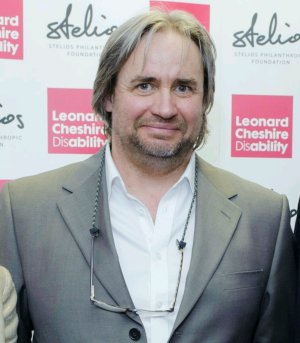
    How to build a successful business around your disability

    Disability Horizons contributor Nichola Daunton talks to James King, owner of Oliver James Garden Rooms and winner of the Stelios Award for Disabled Entrepreneurs 2013, about building a business around his disability.

    Please could you tell Disability Horizons’ readers a bit about yourself and your business?
    James KingI’m a 47 year old father of three, living in Milton Keynes and I’ve been registered as blind since 1998. After leaving school, I started working on a building site as a bricklayer while also studying for my City and Guilds Bricklaying qualifications.
    I realised quite early on that my main strength lay in organising other people rather than the physical art of bricklaying itself. So I started managing a team of builders and built several businesses up from there.
    My Eureka moment regarding my business came on a winter’s day, when I was working at home. I thought I’d sit in our conservatory and do the paperwork. I opened the doors, walked across the cold floor and turned on the portable heaters. I went back a while later and it was still cold, so I turned on another heater and turned up the radiator.


    Read the full article at Disability Horizons 

    (http://disabilityhorizons.com/2014/02/build-successful-business-around-disability/)


    SPORK! Similar Picks:

    IT, Deaf Professional Gives Advice for Job Seekers with Disabilities  

    What can the disabled workforce bring to your company?


    Can a proper understanding of "sustainability" still be limited to environmental issues or the so-called "green economy"? Increasingly, many would argue not.

    Sustainability now incorporates social dimensions such as social inclusion, equal opportunities and anti-discrimination. They are fundamentally linked, and future sustainability efforts must consider them.
    Despite the difficult economic climate, it's good to know the Europe 2020 future growth strategy, developed by EU membersa, reflects this perspective.
    EU2020 is focused on "smart, sustainable and inclusive growth", that is interlinked. Furthermore, the European Commission recently launched a new, three-year strategy for CSR which stresses that, to fully meet their objectives in this area, enterprises should integrate social, environmental, ethical, human rights and consumer concerns into their business operations.
    Read more at the Guardian 
    (http://www.theguardian.com/sustainable-business/disabled-workers-european-disability-strategy)

    Don't be afraid to hire people with disabilities

    Learning from one another has its benefits


    December 10, 2012
    Ask Rex Huppke: I Just Work Here

    One of the best experiences of my life was watching Jamie Smith, a young man with autism, leave his routine in Chicago, travel to the Special Olympics World Games in the chaotic Chinese city of Shanghai — and succeed.

    Jamie's success -- managing in a foreign country and bringing home a silver medal -- was the result of one thing: hard work. And I've yet to meet a harder worker than him, or a person who more appreciates the opportunities a job presents.


    Our workplaces have grown diverse, but jobs remain far too scarce when it comes to people with autism or other intellectual disabilities. Unemployment rates vary depending on the study but hover around 80 percent, and people with disabilities who do get jobs are routinely paid less than other workers. A stigma surrounds people with disabilities, and employers fear that accommodating workers from this demographic might be cost-prohibitive.

    Fortunately, some progress is being made.

    Walgreen Co., for example, has for years welcomed workers with intellectual disabilities. In 2007, it opened a distribution center in Anderson, S.C., with the goal that people with disabilities would make up 33 percent of the staff and be paid and treated the same as any other employee.

    That number now tops 40 percent, and the company opened a similar center in Connecticut in 2009. It also has begun a separate program that recruits people with disabilities to work in Walgreen stores.

    The results, according to Deb Russell, a manager in the company's diversity and inclusion department, have been statistically excellent. Turnover among employees with disabilities is 50 percent lower than that among nondisabled employees, and accuracy and productivity measurements are the same.

    "People think accommodations will be expensive and daunting," Russell said. "What we found, especially on the accommodations front, is that it's minimal. Over the thousands of people we've had in the distribution centers, we've spent less than $50 per person. A lot of the time, all the accommodation they need is an open mind."

    She said that more than 100 Fortune 500 companies have toured the South Carolina facility to learn more about the program.

    "We've been so proud to see quite a few companies coming out recently with programs that are similar to ours," Russell said. "They take what we're doing and make it their own."

    What's important to realize is that when Walgreen and other companies hire people with intellectual or other disabilities, they aren't doing it as an act of charity. They're doing it because the people they're hiring are good employees who help the company make money.

    Scott Standifer, a University of Missouri researcher who studies employment issues affecting adults with autism, said he's encouraged to see large companies such as Walgreen, AMC Theatres and the investment firm TIAA-CREF, to name a few, aggressively employing people with disabilities.

    "For decades the employment specialists who work with people with disabilities have been saying things like, 'These people are very dedicated; they will really love the work; they'll be very loyal employees,'" Standifer said. "The business community knows these agencies are trying to sell their clients, they're trying to convince the businesses to hire them, so they're skeptical. And there hasn't been much data to really back up their claims.


    Read More at Chicago Tribune