Showing posts with label depression. Show all posts

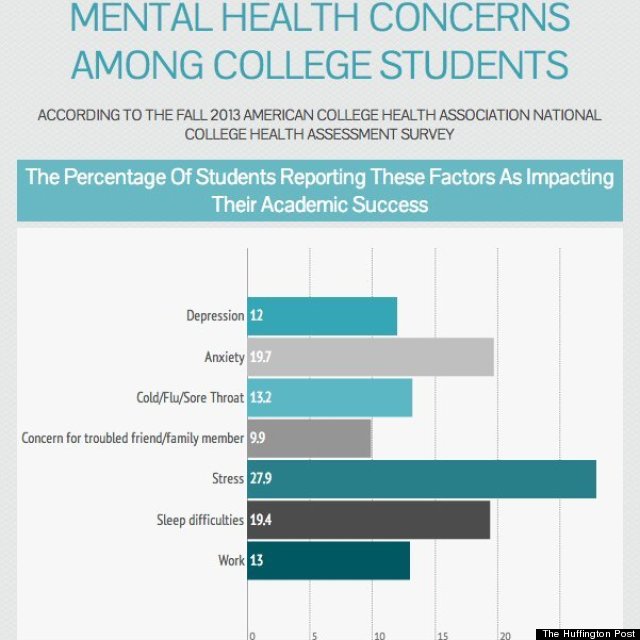
Using College Mental Health Services Can Lead To Students Getting Removed From Campus

By Tyler Kingkade

Rachel Williams restarted her collegiate career in fall 2013, but that wasn't her decision.
As a freshman who had dealt with severe bulimia and anorexia in the past, Williams developed depression. While at Yale Health Urgent Care to get bandaged in January 2013 for cutting herself, a university psychiatrist came to speak with her.
Williams said she was explicit when she told the psychiatrist the cuts were not a suicide attempt. It was self-destructive behavior, she conceded, but it always made her feel "more in control." Still, Yale officials suggested she leave the university, at least temporarily, and get admitted to the hospital for immediate treatment, she said.
"I realized after a few minutes it wasn't a choice," Williams recalled to The Huffington Post. "I had officially lost my autonomy."
Authorities locked Williams inside the Yale-New Haven Hospital, and later transferred her to the Yale-New Haven Psychiatric Hospital for a week. None of it was voluntary, she said. Days after Williams was released, she was told by the university she needed to go home to continue therapy, withdraw from college, and apply for readmission in the fall.
Williams returned in fall of 2013, and went public about her experience in a January 2014 column in the Yale Daily News.
Another Yale student, a current senior who asked to remain anonymous, said the university contacted her parents and strongly suggested she get treatment before her first day as a freshman. But even after getting treatment, the university told the student to take time off. Because Yale has a policy that students cannot start their education halfway through the year, that bumped her back from the class of 2014 to the class of 2015.
"Your immediate reaction is to be angry and extremely pissed off and embarrassed because you have to go through all this," the Yale senior said. "You realize as you go through Yale, this happens to lots of people, but it feels like it's just you, like you're the only fucked-up person."
Some of the same universities criticized by students who sought help for mental health -- like Yale, Northwestern University and Princeton University -- also signed up to work with the non-profit Jed Foundation to examine how they handle student mental health. Jed just announced that 55 colleges are examining their services, focusing on medical leave policies.
Yale spokesman Tom Conroy wouldn't talk about specific students' cases, but called involuntary leaves a "last resort," noting most are voluntary.
"An involuntary leave is only recommended when there is a very severe and unremitting problem that makes it impossible for a student to function," Conroy said. "An involuntary leave in this situation protects the student’s academic standing rather than allowing him or her to fail. Thankfully, most students come back to successfully complete their Yale education."
John MacPhee, the head of the Jed Foundation, said the group would prefer not to see students get kicked out of college due to depression.
"We don't, and it's not our right to, know all of the facts of that particular circumstance, so it's hard to know whether it was handled the right way," MacPhee said. "Our view would be, if it is at all possible, to have the student stay on campus."
Removing a student from campus for "their own good" is controversial, and the stigma may prevent other depressed students from asking for help, some students say...
Read the full article at HuffPost College.
http://www.huffingtonpost.com/2014/10/07/college-mental-health-services_n_5900632.html

Stop Telling Us To Ask For Help. Depression Doesn’t Work Like That.

By Angela Dee

I’ve been reading through so many devastated posts since last night’s news of Robin Williams’ death and the overwhelming theme seems to be: if you’re depressed and/or suicidal “ask for help!” or “reach out”.
But that’s just not how depression and/or suicidal thinking works when you’re in the thick of it.
We need to do so much more as a society/culture to help those with depression and other mental illnesses. We really don’t understand it and have yet to do what is necessary to grasp the enormous complexity of the brain. We understand more about the solar system and the known universe than we do the human mind!
If you have never been there it is easy to overlook how alien the idea is of telling anyone anything when you are desperate enough to consider taking your own life. The shame and confusion that come with not being “normal” or “happy” can be too much to cope with and the thought of reaching out to a friend only exacerbates the condition. Crippling thoughts such as “I ruin everything,” “I’m toxic,” “I only hurt the people I love,” for example are usually at the forefront of the mind, so the last thing one in a state of suicidal overwhelm will think of doing is to ask anyone for help. That action just compounds the feelings of being a burden.
So what IS there we can do with the slight knowledge we do have?
Well, let’s first talk about what NOT to do:
Do not ever shame a person who suffers from mental illness, even if it is behind their back. Shame can look a few ways...
http://www.womenyoushouldknow.net/stop-telling-us-to-ask-for-help-depression-doesnt-work-like-that/

23 Unclinical Signs of Depression

By To Save a Life Staff

Sometimes the Depression Self-Screening Tests are just too clinical, and the symptoms don’t really “click” with you. The criteria may seem general, and if you’re suffering from depression, specifics are easier to understand.

I know that I might not have diagnosed myself with depression just on the basis of those symptoms. I had no change in appetite, and no sleep problems.  (For me, getting out of bed was what was difficult.) Below are some un-clinical symptoms.

1. Things just seem “off” or “wrong.”

2. You don’t feel hopeful or happy about anything in your life.

3. You’re crying a lot for no apparent reason, either at nothing, or something that normally would be insignificant.

4. You feel like you’re moving (and thinking) in slow motion.

5. Getting up in the morning requires a lot of effort.

6. Carrying on a normal conversation is a struggle. You can’t seem to express yourself.

7. You’re having trouble making simple decisions.

8. Your friends and family really irritate you.

9. You’re not sure if you still love your spouse/significant other.

10. Smiling feels stiff and awkward. It’s like your smiling muscles are frozen.

11. It seems like there’s a glass wall between you and the rest of the world...

Get the full list at To Save a Life.

http://www.tosavealife.com/23-unclinical-signs-of-depression/

Please Stop Saying “Committed” Suicide


By Kyle Freeman

Before my brother Jeff died by suicide, I never thought about the language used to talk about suicide.   Immediately following his death and for a long time after, I was so shocked that the terms used to describe how he died mattered little.  But as time passes, and the shock subsides, I’ve discovered that I bristle each time I hear the expression “committed” suicide.   Historically, in the United States and beyond, the act of suicide was deemed a crime.  Until as recently as 1963, six states still considered attempted suicide a criminal act. This is so insanely absurd to me that I’m not going to expend any more energy on the history of the topic but if you’re interested, here’s a link.
Thankfully laws have changed, but our language has not.   And the residue of shame associated with the committal of a genuine crime, remains attached to suicide.  My brother did NOT commit a crime.   He resorted to suicide, which he perceived, in his unwell mind, to be the only possible solution to his tremendous suffering...
https://18miles.wordpress.com/2010/05/20/please-stop-saying-committed-suicide/

6 Things You Can Say to Support Someone Who's Depressed


By Jean Kim M.D.

My recent blog post focused on what not to say to a depressed person. I presented common statements that people tell friends and loved ones in an attempt to alleviate the depressed person’s discomfort, but more so their own unease in the face of a difficult, heart-wrenching situation. Unwittingly or not, statements that put blame on a depressed person’s willpower, lack of motivation, or negative mindframe often backfire and increase that person’s feelings of isolation and hopelessness. The statements sometimes come from a fundamental misunderstanding of the depression illness. It is a biopsychosocial condition that traps its victims in a circuitous broken-record mindset that creates vulnerable, despondent thinking patterns.
So how can well-meaning people provide support to someone with depression, aside from avoiding tendencies towards judgment? How can one show empathy and understanding? Here are 6 things to say to connect with someone living with depression: 
1. "I’m here for you."
Just offering to be there for someone with depression helps. Someone who feels trapped in a cycle of self-loathing often feels unworthy of reaching out to people around them. They often worry about being a burden or nuisance to others, since they are aware of how infectious their mood can be for those nearby. When you decide to let them know you will be there for them, regardless of their fears of judgment or of wasting your time, they can feel less alone and feel less social pressure. You don’t even have to necessarily say anything to them while you're with them. This can help put a crack in the cycle of negative self-worth and enable them to realize people still care regardless of their sad outward presentation.
2. "What can I do to help?"
Depressed people may not necessarily be in a state of mind to know or say what will help them, but just hearing someone's willingness and openness can help lift their spirits. Even if they say nothing needs to be done, they have heard you. They can sense that you care, and that can reassure them when they're caught in guilt-ridden thinking. If they do request something, you’re in a great position to help. Even just being there to listen to their worries can help.
3. "I like [X/Y/Z] about you."
Low self-esteem becomes a self-fulfilling prophecy with depression. It leads to feeling misunderstood and out of sync with everyone else. Depressed individuals often mentally beat themselves up. Hearing positive reinforcement can help soften their self-berating tendencies and test the reality of their thoughts. Do not offer fake praise, but share honest reasons why you enjoy the person’s company or love them. Often their mood skews their perception of their lovability...
Get the full list at Psychology Today.
https://www.psychologytoday.com/blog/culture-shrink/201507/6-things-you-can-say-support-someone-whos-depressed

A Letter of Regret From Your Anxious and Depressed Friend

By Kirsten Young

Dear Friend,
I was not always this way.
I did not always hide away from the general public for months or weeks at a time. Once I was quite confident. I occasionally felt happy. I had a full time job and I could face customers with no concern. I would chat to people over the phone, make an effort to see friends, be interested in daily life. I could cope with negativity. Overcome it, even. I wouldn’t let anything bring me down because I had something inside me that made me keep going out there, into the world, facing it all.
But sometimes, Friend, things happen. Sometimes just one thing. Sometimes many things. The courage to face these things is strong at first, at least stronger than now. But depending on luck, or coincidence, or fate, or opportunity, eventually the voice of that courage for some people is quieter. Weaker. And sometimes, silenced completely.
It is not your fault these things happened. And if you hear the tales of what they were, you will likely hold an opinion in your head of what could have been done or said as a result to resolve the issue. But your experience in this life is not the same as mine, Friend. No matter what we have in common, we can never share the exact same perception. Please make sure not to confuse your perception with mine. We are different.
Sometimes I need a break from people. Usually the people who I don’t yet know completely, but like, and with whom I want to hold some kind of friendship. I’m already tired of feeling anxious and sad and don’t want you to grow tired of me feeling anxious and sad. I’m sure you care and would be happy for me to confide in you, but I’ve confided in friends before and been burned and heartbroken in return. I can’t bring myself to take that kind of risk again.
I’m afraid I won’t be good company. I’m afraid I’ll burden you with my emotions which I don’t feel would be fair on you. I have heard of your struggles too, Friend, and would like to help you, but I can’t. I take all struggles as if they were my own and my load is already far too heavy. Sometimes my whole world is devoid of any good news, and any conversation we could have would be very quiet on my behalf. All I can really do is listen, because if I speak I might burst into tears. But I don’t feel strong enough to pretend to be holding myself together right now, so I’d just rather not.
I’m sorry you feel I’ve been avoiding you. You see me comment on social media but I ignore your messages. This is because commenting on social media is usually not personal. It’s a distraction. It’s a way to have adult conversation without the spotlight being on me. I can do it in my pyjamas without having done my face to look like I’m prettier than I feel on the inside. I don’t run much risk of having to answer the question “How are you?”
…because I don’t want to lie to you. That would make me feel anxious when I’m already feeling anxious. I don’t believe in lying to people, especially people I care about. So for that reason, I can’t run the risk of being asked this question...
Get the full story at Talking This and That.
https://talkingthisandthat.wordpress.com/2015/06/02/a-letter-of-regret-from-your-anxious-and-depressed-friend/

WHEN THERE’S A WILL, THERE’S A WAY

By: Jazmine Joyce

I remember sitting in Tina’s little cubicle.

I remember Tina.

A fairly small Greek woman who was introduced as my new psychologist, well, at least until I felt better.

I remember how I got there.

My grandma referred me.

She referred my aunt and my aunt's daughter too. She had referred my mom, but my mom refused to listen to anyone tell her she was an unfit mom. My aunt was losing her mind. My grandma was losing her mind because of my aunt, and my aunt's daughter had highly problematic emotional problems.

Before I saw Tina there was another woman who counseled me, Ally. She sat across from me, in her medium-sized leather chair ill equipped for her tiny frame and goes, “If I had to diagnose you, I’d say you have depression and a nervous disorder.” I was so relieved to finally get a label. I wanted to scream my pre-ejaculated diagnosis to the world.

Why, you ask? I grew up with a mom who had, but was never diagnosed with, a nervous disorder. It affected me greatly as I'm sure it affected her. Growing up I couldn't do anything without being insecure and frazzled. My cure was, supposedly, to just “get thicker skin.” I would go into classes hyperventilating; I begged my mom, with tantrums, in front of my freshman class, the first day of high school, to not do this to me, to not make me do something I didn't want to: be around people who I thought would judge me, because in my mind that’s all they were doing. A student in class would start giggling and my eyes would tear up because I thought that laugh was directed towards me. Because of my impulsive thoughts I missed out on a lot of what could have been nostalgic high school memories.

I just wasn't getting it, I thought. Then I met Tina and she reframed my train of thought. “Depression is like a disease,” she sympathized as tears rolled down my cheek one at a time as if they wanted to be fair and give each other recognition; my family didn’t acknowledge this statement. Depression was something that was trumped and not coddled.

Depression is handled in many different shapes and forms. You have the cutters, the chainsmokers, the physically abusive and or mentally abusive, the pill-poppers, and then you have me: a feather pillow pincher. My aunt gave me my first feather pillow before first grade and she gave me my second my sophomore year of high school. At the time, I didn't realize how important the introduction to this type of pillow would be to me throughout my years. I don't know exactly how it happened, but my feather pillow became my escape from reality. I pinched it when I was nervous and it had become a major distraction and eventually it became a nervous tick. I pinched it when I was happy, when I was sad, when I was nervous, but mainly it kept me in tune with myself and distracted me from self-mutilation.

Today I stand incredibly tall, four foot eight and a half inches, with short brunette butch-like hair, hazel eyes, identifying as a non-radical feminist/lesbian who likes androgynous women, particularly one named Gabi, who still at 23 years of age pinches her sophomore year feather pillow and I deal with my differently abled characteristics differently than I did years ago, pre-Ally and Tina, but I'm not over it. Over time I have come to accept and acknowledge people's different ways of handling life because we can't all tell ourselves to “grow thicker skin” and get over who our chemically defined beings are at this very moment. We can figure out how to deal with ourselves, but to ignore it isn't possible for some. Some people can tell themselves to get over it and have that work for them as an individual. It’s how they cope and that’s great, but others, like me, with highly problematic nervous problems, can't look at that phrase as a solution to the problem.

As an American Sign Language Major, I am constantly learning and taking example of Deaf Culture and how its people adapt to their differently abled bodies. It’s captivating to see and be a part of a whole different type of communication. Relying on my body language, facial gestures, and hand movements, I become a part of a whole other world and I love what sign language embraces. As a member of a family where mental illnesses are present and constantly surfacing and as a writer it’s my duty to sign, to acknowledge, to reiterate and to write: When there’s a will there’s a way and where there’s a Jazmine there’s a story to tell about it.

Read more about Jazmine and her work at www.sporkability.org

#THESILENTKILLER


April 29, 2015
By Shalirrah Barksdale

Rarely am I moved by something that I read. As I sat researching topics for my next SPORK! piece I pondered what I should write about. I questioned the validity of my words. Sure, I am proficient in my work. I can read and report as well as anyone else. What I like most about writing is being able to share with others. I like having the ability to have someone else share in my experiences, even if the experience only lasts a few paragraphs.

This particular experience that I would like to share is not my own. The experience that I am going to share tugged at strings of empathy deep inside of me. It made me think beyond myself and get a glimpse into what life is like living with depression.

The experience I am sharing is that of Terrel J. Star, who wrote the piece “The Night I Spoke Up About My #BlackSuicide”for Buzzfeed.

In his article Terrel talks about his childhood, growing up in a violent home and his ultimate plan to kill himself.

As I read Terrel’s article, I felt sick. Terrel’s words and struggles hit close to home.

Terrel grew up in Detroit, MI. A city known for its violence and crime. I myself grew up in Youngstown, OH – another city whose nightly news stories rarely talked about more than shootings and murder. Like Detroit, Youngstown is known for its flaws. Gangs and violence are a regular occurrence, often taking place in a child’s own home.

Growing up, I, like Terrel was taught to survive. I was taught to not talk about what was bothering me. I was taught to tuck my feelings away in a hiding place that no one would ever find.

Terrel noted the effects that his childhood had on his adult life. He talked about depression amongst African Americans and the silent weight that comes with it. He talked about bottling his feelings, the feelings that would in turn absorb him long into his adult life.

He talked about feeling low – so low that suicide seemed like the only answer.

Reading Terrel’s story left me with a lot of questions. Is depression black and white? Is it easy to spot and diagnosis? What happens when an individual is in denial? What happens when they don’t want to seek help because asking for help is like giving up?

Seeking help is hard, asking for help is even harder. Any one of us can open our laptop and do a quick google search. We enter our worries into a box and hit enter before we are given a litany of presumed answers. A static page that must have all of the answers, because, well – the internet said so.

Deep rooted unhappiness tends to dwell when left on its own. It is like a visitor that you never actually invited over. This visitor drops his/things off in the spare bedroom with no intention of leaving. Depression can rest within a person forever. Unwatched it will grow, slowly suffocating its life source with no avail. Hope for relief can seem like a distant wish that may never be granted.

The Internet and all of its world wide connectivity can be that wish. It can be a tool for knowledge and in turn a tool for hate. We are living in a time where social media has never been more prevalent. Rather than see social media used as a tool for racism, bullying and hate I would like to see it used as a vessel of understanding. A place for people to come together and share in common struggles and triumphs. A place for people suffering from depression to feel safe. A place where we can boost one other to know that we are all in this together.

My hope is that more people like Terrel will come forward and tell their stories. I hope that when a person is lost in despair, that they too know they aren’t alone. As a society we have to work together to minimize the stigma of depression. We have to help one another understand that suicide doesn’t have to be the answer. We have to understand that every life matters.

To find more information about Shalirrah, please visit her here

THE MISSING COMMON VERNACULAR

May 13, 2015
By Genevieve Armstrong

Anything I initially learned about the body and how it functions was in a biology classroom. I grew to have a tremendous fascination with anatomy and physiology and took up an internship in a medical lab for a couple years, which set a firm foundation for my biology education. Everything I have learned about my brain was in the setting of science. I look at my disorder through the lens of basic anatomical and physiological comprehension, and a long streak of my own medical research using PubMed, the university library and the like. I have also spent a profuse amount of time reading forums of personal experiences written by doctors and patients, and conversing with people who share the diagnosis of bipolar disorder. Doing this has shaped how I understand my own personal experience. From all this time spent trying to expunge everything I can from the available pool of knowledge, I have learned most of all just how few people understand mood disorders and, more importantly, how to talk about them.

Bipolar Disorder, in large part, gets diagnosed through descriptions of subjective symptoms i.e. I go to see a psychologist or psychiatrist (yes, there is a difference) and describe how I am feeling and how it’s affecting my life. In this half of the experience of the disorder, there aren’t necessarily quantitative measuring standards; how one gets diagnosed relies greatly on their ability to communicate and their knowledge of the language they speak. If someone were taught their whole life that they need to conceal their emotions and were never given the opportunity to exercise the language with which they would use to speak about them, odds are, they will be more limited in their ability to describe their symptoms and the understanding of their impacts. Often times, this concealing gets glazed over and called “controlling your emotions” giving them an illusion of fantasy, as if, contrary to reality, these feelings exist as a figment of your imagination and are not to be taken seriously. This is the danger of treating emotions, especially more negative ones, as a taboo subject—you never cease to have emotions, yet you cease to be able to understand them and respond in a healthy way. Unfortunately, this can lead to misdiagnosis or a complete lack of diagnosis.

Please understand that every person on the face of this planet can, and does, occasionally experience similar depressive and manic emotions as someone with a mood disorder. This provokes the reiterated sentiment of “snap out of it”, a technique people not inflicted with a disorder tend to resort to in times of emotional distress, but someone with a disorder will experience these fluxes of moods in regular, mostly predictable cycles. Please also understand that someone without the disorder cannot fully understand the powerful force that envelopes your entire capacity to function, physically and emotionally, to prevent the concept of rising above an intense mood shift. In addition to surrendering to the incapacity to understand, also keep in mind that someone with a mood disorder may not be directly emotionally reacting to a life event but is experiencing a regular wave of mercurial episodes. In other words, if you have an urge to tell someone to “get over it”, there may not be a specific “it” that needs to be gotten over per se; “it” may just be a chemical shift. This is not to say that an episode cannot be triggered by an occurrence, but merely to say that an episode can emerge entirely independent of life events. This is confusing, especially to someone without the experience, majorly due to a tendency to relate personal emotions to dramatic events. Most people, understandably, learn that their emotions are derived from things that happen to them and not manifestations of physical chemistry. This dissonance creates a conundrum; sometimes something described as terrible by a depressed person would not have been described as such if the person were not already dysthymic. Or, turning the tables to mania, something may not have solicited such excitement and energy had the person not been in an up flux of hyperthymia.

Mood disorders reach far beyond the scope of feelings, though; it will alter one’s physical capacity to function as well, a concept constantly misunderstood by people who do not experience it. In contrast to subjective symptoms, someone with bipolar disorder will exhibit a combination of other quantitatively measurable symptoms like sleep patterns, significant changes in weight, record of frequency of recurring mood episodes, reductions of grey matter in the right prefrontal and temporal lobe in the brain, and so on. They will also have a family history for mental illness since it is inherently genetic.

There are even neurocognitive impairments involving executive function, psychomotor processing speed, and verbal memory a person with bipolar disorder will experience that can be quantitatively measured using a test battery (Latalova, Prasko, Diveky & Velartova, 2010). Executive function entails brain processes including working memory, reasoning, multi-tasking, and problem solving as well as planning and execution. Psychomotor processing is one’s motor capacities or physical performance of the body. Studies show that these two functions, and verbal memory recall, are all incapacitated to a degree during stages of bipolar mood cycles. So, in short, what I understand here is that during any given stage of mood fluxes one can exhibit similar symptoms to just about any cognitive dysfunction that exists, from ADD and Alzheimer’s to verbal memory impairment to something similar to nerve damage, to something similar to a learning or social disorder. Impairment in these basic brain functions are considered endophenotypes because, through extensive familial studying, researchers have determined that not only is the patient subject to these drawbacks, but their immediate family is also susceptible to them when compared to people without any history of the disorder in their family (Latalova, Prasko, Diveky & Velartova, 2010). The expression of these impairments correlates with the genes suspected to be responsible for the presence of bipolar or schizoaffective disorders.

To further this idea of neurocognitive impairment, I will provide a specific example from my life: when I am in phases of dysthymia I greatly lose my capacity to draw. My hands are not as nimble as when I am euthymic (or in between phases) and my drawings start to look like they did when I first was learning how to draw. I lose my sense of muscle memory and refined motor skill. My inner dialogue, or the conversation inside any artists’ mind while creating, hinders and it becomes much harder to make concrete decisions about how to transform a drawing above its lines and smears. Even when I force myself to make the decisions, the drawings come out wrong, unbalanced, lopsided, or naïve compared to other successful pieces. My ability to plan the time to set aside and to reason how to best carry out the process of namely making a drawing becomes exponentially more difficult. I think, “Where is my paper… I know I put it somewhere. And where is that damn charcoal!” all the while they are both neatly in their places in front of me in my studio. Nonetheless, after a frustrating half hour of searching, forgetting what I was looking for a couple times in the process, I manage to get paper, charcoal, and the board all set up. Now, if I were to draw a simple portrait I would usually start with something like a gesture and basic allocation of shapes that are present in the image (i.e. a circle for the head, lines to measure proportions of eye-to-head and eye-to-nose-to-mouth ratios, a small shaded pentagonal shape to indicate the shadow of the nose, etc.), but for some reason the short time it takes to look at the image or person and look back at my paper is enough time for all the information I saw to fall out of my head, and then I forget where I was, sometimes I forget what I was doing, and then I give up. If you have bipolar disorder, or any mood disorder, then you have for sure experienced some form of this phenomenon which I have come to refer to as “derp-ression”. If you do not have a mood disorder at all, there is still a chance that you have experienced this. It’s daunting. It can be defeating. It can crush any amount of enjoyment in anything. The worst part for me is that I can only wait it out; any amount of over exertion will lead to a debilitating lowering of my self-esteem which can potentially kindle an emotional depression and exacerbate the dysthymia.

Given my simple example, you can probably imagine a time when you have had this sensation. Whether it brief and isolated or recurring, you are officially aware of its presence. Now, pull this instance and blow it up like a dirigible, and imagine being inside the great big balloon. Imagine that almost everything you did all the time gave you this obstacle except for maybe a euthymic week here and there while you are transgressing one stage to the next. Inside the balloon of your floating zephyr you are suspended in zero gravity, whirring about with absolutely no grab hold and you can’t even remember how you got there, but you can see the little people walking calmly about the suspended basket. I don’t mean to imagine JUST the state of mind; I want you to feel it in your gut, like you’ve been floating in water very still for too long and you’ve lost any control over your body. Now imagine that sensation while typing on a computer making ten times more typos than usual, or standing and trying to listen to someone speak but you can’t understand what they are talking about or how to respond, or walking from one room to the next and forgetting where you were headed every time. Imagine feeling that while lying in bed, immobile, seeing nothing with your eyes wide open. You are not sad, you are simply defective, like a toy whose power switch is turned on but someone cut the wire to its outer circuits. When I am overtaken by dysthymia, more than anything I just want to be one of the people in the basket again, but this overwhelming dissociation in the brain reigns supreme. These time periods make me feel like the atmosphere has thickened into a hyper-stimulating suffocating fume of numbing panic because I can’t put my finger on exactly what is wrong or what’s happening to me, but I can’t shake that my whole body feels dysfunctional. Every part of my day becomes affected. Every part of me shuts down in response.

If you can even begin to fathom this experience, then you are one step closer to grasping why “snap out of it” doesn’t exist for someone with a mood disorder. It’s not just feelings; it is everything you are all at once out of your control for an indefinite amount of time. I need to remind you that this is not an exaggeration. I am striving to communicate the actual, literal experience. If you have trouble believing me then I want you to think about what it means to have broken a bone. I, myself, have never broken any bones. I have only been cut and bruised. I cannot fully imagine how sickeningly painful breaking a bone feels and I will never know until I break one. In the instance you have broken a bone, how on earth can you describe that pain to someone who has not? How many words for pain can you come up with before you understand that most of those words can only be understood in direct experience to that degree of pain? While you may not grasp the full intensity of my description, it is the best I can manage to help you understand that you probably cannot ever fully comprehend, just as I cannot understand the intensity of pain of a broken bone. And get this: I haven’t even touched on the subject of mania!

Now, imagine that the person you sit next to at work experiences what I have described on a regular basis. Imagine how hard they have to work to make you unaware of it even though the experience can be devastatingly overwhelming. Imagine what it would feel like to try and continue to work like nothing is wrong while having a broken arm. Can you begin to imagine what it feels like for someone to tell them that they just need to try harder? That they don’t need help, they just need to be stronger? Can you imagine screaming for help inside the envelope of the balloon and the person who could easily throw you a line just stares at you? If that was the response in screaming for help, how long would you continue to scream?

The answer is simple: not very long. You would probably find a way to make everyone around you feel comfortably ignorant because they will probably avoid you if you don’t. They will probably begin to think that you are trying to dump on them if you so much as mention a problem and who wants to be dumped on? So, you try your best to keep the erratic away from anyone and save it for when you are safe at home out of the scope of judgment. You might spend hours staring at a wall, or a TV that you aren’t hearing, or repeatedly bashing a brush into the side of you head to try and misdirect the dissonance, or smoking or swallowing whatever recreational drugs you can get your hands on. You may even indulge the addiction to slide a razor across your palm, or your thigh, or the part of your shoulder you can’t see under a shirt, or the side of your face in your hairline just to force your body out of its petrification. Anywhere that no one will suspect, anywhere you can relish and feel comfortably secret. Like I said, you may conceal your emotions from the world, but they will inevitably manifest in some way at some time. Thus, in the absence of a helping hand, a capable professional resource for assistance, you get pushed to an extreme. Without a working vocabulary, and an assist that understands it, you become trapped.

Not knowing this information, not understanding it, not recognizing what to do with it or how to act, is not anyone’s fault in particular. I have been diagnosed for eight years, and I am only now getting to a point where I can understand this andcommunicate it with some level of effectiveness. This is something that directly impacts most of my functioning life. If you don’t have this disorder, why would you have any reason to even think about it?

And that is OK.

What is not OK is acting like the people around you aren’t experiencing something traumatic just because you don’t experience it yourself. I am reminded of an ongoing debate between which is worse: being kicked in the nuts or childbirth. If you can experience one of these traumas, then you do not have authority to speak on how the other feels.

A large portion of unaffected people have a general lack of educated vocabulary and compassion for people with mood disorders, which leads to a great deal of stigmatizing. I think men with bipolar disorder may receive the worst of it because of a ubiquitous cultural standard for men to pretend they don’t have emotions. What more, the problem can become worse if you manage to be able to imitate some functioning level of normalcy because then you really have no excuse if you break through on your meds, or have a bad relapse; you were fine last week, weren’t you? It often appears that a mood disorder isn’t taken seriously until the person ends up in a hospital after they become completely debilitated. It seems like no one can take the persons word for what they are experiencing until they break—they are either found half dead, if not dead, somewhere from attempted suicide or found wandering around the city half naked with their hands painted purple, shouting about being the messiah.

General fear of the diagnosis becomes a vehicle for denial, too. Countless people I have spoken with, including people without a disorder, are terrified of medical malpractice in terms of diagnosis and treatment. They have horror stories of friends or family who were misdiagnosed and responded poorly to expensive treatments that close to ruined their lives. A lack of reliable, dependable, trustworthy research, in combination with the commercial quality that has become so normal to the pharmacological treatment of mood disorders also accounts for a general lack of trust in the psychiatric industry. Too many doctors have become swayed by monetary incentive for writing prescriptions even in the face of a field of study that shows how much more effective cognitive behavioral therapy can be compared to pharmaceutical treatment (Latalova, Prasko, Diveky & Velartova, 2010). In a field where so much of what we know is mutable, it becomes extremely difficult to place trust in the treatment of a disorder that hardly anyone fully understands. Still to this day, the DSM (diagnostic and statistical manual of mental disorders or the standard book through which doctors diagnose mental illnesses) changes how it defines and categorizes disorders. For instance, it wasn’t until the 1986 update in the manual that homosexuality was removed entirely as a disorder; an assumption that back when the DSM was created seemed entirely reasonable, yet now seems completely absurd. Even some doctors, themselves, are coming to a place where they don’t trust the DSM, and are taking it upon themselves to dive deeper in order to understand how to reliably diagnose illnesses.

Having stated all that, I want to share one more personal experience: There was a day back when I worked in a busy coffee house in downtown Boston that I woke up entirely not functioning. That particular coffee house created an intensely stressful work environment and it got the better of me, and I woke up crying and unable to move. I didn’t know what to do besides call, explain what was happening to me, and tell them that I couldn’t make it, me: the one who was never late to work, who worked late to get the job done, the over achiever. We agreed that I would get there as soon as I could and we’d all figure out how to handle the issue later, but when I arrived I heard my superior in the back on a diatribe about how people need to learn how to control their emotions. They were shushed as soon as the person with them saw me, but the damage was already done. They didn’t believe me, and it didn’t matter how hard I had worked myself before that moment, because to them, I just needed to learn how to control my brain chemistry. Soon after that, I applied to be transferred to a calmer coffee house with a much lower traffic flow, and that fixed the entire problem, but I still can’t get that persons voice out of my head sometimes- people just need to learn how to control their emotions.

Lucky for me, I understand my disorder. I understand how to fix my issues, and prevent mood swings as much as possible, and how to ignore other peoples’ blind ignorance. Lucky for me, that company I worked for had policies about how you can treat your employees, especially when it comes to mental illness. Lucky for me, I grew up learning everything I could, all the words, all the language, all the therapy and coping skills, and that moment rolled right off. But what if it hadn’t been me? What if it hadn’t been that company?

We all need to start talking. We all need to start learning. We all need to accept that we have emotions, that we are all differently abled in some way, shape or form, and we need to learn how to be accepting of one another instead of stigmatizing what we don’t understand. For the sake of everyone’s emotional health, we need to stop thinking that our emotions are not real and vital, and instead learn how to talk about them, and cope with them in positive, healthy ways. It can’t just be a coincidence that when I start talking to ANYONE about depression or mood swings that all of the sudden they get a massive wave of relief. They know that I understand and won’t judge them; I will hear them and accept what they say without remit. Destigmatizing emotions would benefit everyone, and could lead to more affordable, more available, and more transparent treatment for anyone who needs it before they hit an extreme, before it’s too late.

BIBLIOGRAPHY
Latalova, Klara, Jan Prasko, Tomas Diveky, and Hana Velartova. "COGNITIVE IMPAIRMENT IN BIPOLAR DISORDER." Biomedical Papers 155.1 (2011): 19-26. 2011. Web. 12 May 2015.

Genevieve Armstrong is a Dallas artists, illustrator and writer. You can visit her at www.gennarmstrong.com

A Lawyer Breaks the Silence About Depression Among Lawyers

Capture456456

By Dan Lukasik, Special to Everyday Health

When I turned 40 over 12 years ago, I was a busy lawyer working at a blistering pace at a law firm. Stress, anxiety, and caffeine were my daily fuel. While my life before this time had been punctuated by long periods of pensive sadness, nothing could have prepared me for the dark storm that was about to descend on my life.

I wasn’t sad just some of the time now. I was sad all of the time. I was crying quite a bit, but never in front of anyone. My sleep became fragmented, disjointed. I couldn’t concentrate or get things done at the office – and given all of my looming deadlines, you would think that I would be panicking…but nothing. I was lost in a deep sadness and emptiness.


I related to my therapist that I felt my life just wasn’t worth living. “Dan, it’s the depression talking.” He referred me to a psychiatrist, who diagnosed me with major depression and recommended that I take three months off to rest and let the medication kick in. I was relieved that a doctor had finally diagnosed my illness. I felt soothed when he told me it wasn’t my fault, that I needed medical attention. But I also felt troubled.

I was one of four owners of my law firm, so I could delegate work to more junior members. But as the managing partner of the firm, I was expected to be the leader and was responsible for some of the firm’s largest cases. These couldn’t be handed off. My three partners noticed that I wasn’t moving business like I used to. How were they going to react to my taking so much time off from work? A lot happens in a law firm in a week, let alone three months.
Breaking the Silence About Depression

The day after I saw the psychiatrist, I met with my partners. As I spoke, it was as if something were pushing the air back down my throat into my lungs.

“I need to tell you guys that I have been pretty sick lately. I’ve been seeing a psychiatrist and he put me on some medications for depression. He said I needed to take off some time from work to get better.”

“How much time?” one partner snapped. It felt accusatory rather than caring. The moment he said it, I braced for what was to follow.

“Three months,” I replied.

“You’ve got so much going well for you in your life. Why the hell don’t you go on a vacation?”

The subtext was clear: If I’d only snap out of my funk and be more grateful, I wouldn’t be so depressed. Little did he know that I was depressed even when on vacation.

“Dan, you at 95 percent is better than most lawyers I know,” another partner said confidently.

“I’m not at 95 percent. I am at 5 percent,” I replied.

A worried look seemed to overtake him. Perhaps he was troubled that I hadn’t replied appropriately to his compliment. I also thought that his words were meant to diminish the problem. How could it be true? I looked the same as I had all along. There was just my representation that I had depression...
Read the full article at Everyday Health 
http://www.everydayhealth.com/columns/voices-of-experience/lawyer-breaks-silence-about-depression-among-lawyers/
SPORK! Similar Picks:

Let bipolar lawyers practice

I THOUGHT BEING MISERABLE WAS JUST PART OF BEING CHINESE AMERICAN

By:  - May 15, 2014 
I was a funny person. I laughed a lot. I was just unhappy a lot of the time.
image
Doing the Wong show.
When I told my white friend about how my grandmother’s TV remote control is mummified in plastic wrap and that she’s superstitious about food passing through certain doors in the house, he asked, “Does she have Obsessive Compulsive Disorder?”  
I laughed, “Haha! No way! She’s just Chinese!”
I’m a third generation Chinese American. In my 20s, I was tested for Attention Deficit Disorder. Some of the criteria indicating that I was a candidate for ADD made me immediately suspicious of how any mental illness is gauged and how culturally competent the test makers are.
Does crying for weeks on end that I didn’t get into UC Berkeley make me prone to depression or was I just a high school drama queen? Does being a disorganized overachiever constitute Attention Deficit Disorder or was I just somebody with a lot of goals? Does screaming at my guests to take their shoes off in my house mean I have OCD or that I’m just Chinese?  
I believed for many years, and even now, that the misery of my life was not a diagnosable medical disorder, but was just about being a Chinese American navigating life in the Western World whilst being held to unrealistically high expectations (bilingual concert pianist brain surgeon anyone?).  
image
I was never raised to be happy as much as I was raised to be successful. And that success usually came in specific quantifiable terms like having a well-paying job, a medical degree from a reputable school, or marrying a Chinese bilingual doctor husband.  It was inferred that once I had all those successes, I’d be secure in life, and that security was going to make me happy.       
I won’t lie. Getting good grades, winning trophies, and stacking a long list of accomplishments on my college application made me feel good because it meant I had avoided my parents’ idea of a failure. But most of the time, the road to the seemingly unattainable, chasing a dream that wasn't really mine, felt so totally miserable and pointless.
I also believed life was supposed to be miserable -- because hard work is miserable. Had my parents and immigrant grandparents not worked through their misery, I wouldn’t have the opportunities that I do today. Passing that legacy of misery onto your kids -- that guilt we carry is what makes us work harder. Bucking up and moving forward through that misery without complaining -- this is the Chinese way. Isn’t it?
 Read the full article at XOJane 
http://www.xojane.com/issues/i-thought-being-miserable-was-just-part-of-being-chinese-american
SPORK! Similar Picks:

Mental Health in the African American Community

Back from the Brink: True Stories & Practical Help for Overcoming Depression & Bipolar Disorder

Learn more
“We are lonesome animals. We spend all of our life trying to be less lonesome. One of our ancient methods is to tell a story begging the listener to say — and to feel — ‘Yes, that is the way it is, or at least that is the way I feel it. You’re not as alone as you thought.’ ”
~ John Steinbeck
By GRAEME COWAN

Reviewed by MEGAN RIDDLE

For those in the depths of mental illness, there is no lonelier place. It is an incredibly isolating experience; it convinces us that no one could have ever felt this way before. And it is the power of mental illness to make us think it is impossible to ever feel better again.

Layered onto this is the associated shame and denial as we try to hide the condition from friends, loved ones, colleagues at work, the world at large. It can be a very dark place.
In Back from the Brink: True Stories and Practical Help for Overcoming Depression and Bipolar Disorder, mental health advocate and depression survivor Graeme Cowan works to shine a light. For those with depression and bipolar disorder as well as their friends and family, this book can provide both inspiration and practical advice.

Cowan’s book includes an overview of depression and its treatments, extensive interviews with those who have successfully managed their illness, and results from the author’s own survey of more than 4,000 individuals with mood disorders about what has worked for them.

Cowan begins with a review of different types of depression and available treatments, but it is his interviews with public figures that comprise the heart of the book. He includes Q&As with former US Representative Patrick Kennedy (who is also son of the late US Senator Ted Kennedy); Trisha Goddard, a British television talk-show host; Bob Boorstin, the director of public policy at Google; Alastair Campbell, former chief advisor to Tony Blair; and former professional athletes, among others.

What struck me most about those interviewed was their bravery andresilience. When so much of mental illness is shrouded in shame and secrecy, these individuals have chosen to be public about their struggles. This is illustrated clearly, as each chapter begins with a photograph of the person sharing his or her story. They are not hiding. These are people who have struggled tremendously, who now speak candidly about everything from psychosis to suicide attempts — and who have still created for themselves fulfilling and successful lives.

Cowan’s questions cover their childhood, illness, and recovery, as well as how they maintain their wellness now. The diversity of voices enriches the book, each providing a unique perspective for the reader to hear.

Certain themes emerge, including the importance of helping others with their struggles. Patrick Kennedy notes, “I realize I wouldn’t be the person I am today without all of those life experiences. I also realize that in serving others I can be freed from the bondage of self to live a life beyond my wildest dreams.”

Cowan’s own story reflects this as well. He has survived four suicide attempts and five episodes of major depression. He has crawled “back from the brink” many times, and now devotes much of his efforts to mental health advocacy.

In fact, frustrated by the limits of evidence surrounding treatment for mood disorders, Cowan took it upon himself to conduct a survey of over 4,000 “fellow travelers” to try to get a sense of what worked for them. His results emphasize the importance of finding allies among family and friends as well as in a trusted mental health professional. Cowan also gives tips for moving forward, writing, “What I learned after five episodes of major depression…is that taking action is essential to recovery.”

The book provides a fairly balanced perspective as it emphasizes the importance of self-care, overcoming personal inertia, and teaming up with clinicians.

Personally, I found the interviews a bit choppily written — the question-and-answer format could have been better. That said, I was drawn in by the honesty of each person’s responses. Often their answers left me wanting to hear more about their experience.

If you have dealt with depression or bipolar disorder, you’ll likely relate to the stories in this book. You may even find yourself thinking, Yes, that is the way it is, or at least that is the way I feel it.

After all, none of us is as alone as we thought.
Back from the Brink: True Stories and Practical Help for Overcoming Depression and Bipolar Disorder
New Harbinger Publications, January, 2014Paperback, 232 pages
$16.95
Psych Central's Recommendation: Worth Your Time! +++

Read more at PsychCentral 

http://psychcentral.com/lib/back-from-the-brink-true-stories-practical-help-for-overcoming-depression-bipolar-disorder/00019436

10 Comics That Can Help You Understand Mental Illness

Lauren Davis


Comics don't always have the best track record when it comes to portraying mental illness. In superhero stories, mental illness is often associated with violence and villainy. There are, however, other, often personal, comics that can open your eyes to real human experiences with mental disorders.
Just a heads up: many of these comics deal with self-harm, suicide, and other issues that can be triggering to some individuals.
10 Comics That Can Help You Understand Mental Illness

1. Psychiatric Tales by Darryl Cunningham


Darryl Cunningham worked as a nursing assistant in a psychiatric ward and witnessed the realities of mental illnesses and their symptoms. Psychiatric Tales combines science, history, and anecdotes to demystify and destigmatize mental illness, and Cunningham's stark artwork can be deeply affecting. You can read portions of Psychiatric Tales online in their pre-press form, including "People With Mental Illness Enhance Our Lives," "Dementia Ward," "Suicide,""Schizophrenia," "Cut and Delusions," and the last chapter.
10 Comics That Can Help You Understand Mental Illness1SEXPAND

2. Hyperbole and a Half"Adventures in Depression" and "Depression Part Two" by Allie Brosh

Allie Brosh turns her manic humor on her own depression in a pair of comics that are both deeply personal and explain brilliantly the sense of hopelessness, exhaustion, and self-loathing that comes with depression. It's also a reminder that relief can come from unexpected (and sometimes completely nonsensical) places, like a shriveled-up piece of corn found beneath the refrigerator.
10 Comics That Can Help You Understand Mental Illness

3. Marbles: Mania, Depression, Michelangelo, and Me by Ellen Forney


When cartoonist Ellen Forney was diagnosed with bipolar disorder, she was in a manic phase and not eager to seek treatment, fearing that medication would impair her creativity. But after she was hit with a major depressive episode, she started her journey toward reconciling her illness and treatment with her creative life. Marbles is a look at bipolar disorder from the inside, capturing the seductive qualities of mania and the ambivalence some people feel about treatment and medication.
10 Comics That Can Help You Understand Mental Illness2

4. depression comix by Clay

The artist once famous for The Thin H Line and Sexy Losers (both NSFW) has created a sometimes gut-wrenching, sometimes tender, often relatable series of comics about the daily struggles of life with depression. Decidedly unclinical, depression comix instead gets into the heads of depression sufferers and the people around them, exposing many of the tragedies of depression: how it encourages sufferers to mask their true feelings, the sense of worthlessness that comes with the illness, and how sufferers can shove friends away just when they're desperately in need of social support. However, he'll also capture the occasional moment of happiness and love.
10 Comics That Can Help You Understand Mental Illness3
Read the full article at i09

http://io9.com/10-comics-that-can-help-you-understand-mental-illness-1576917503
SPORK! Similar Picks:

This webcomic captures the day-to-day horrors of living with depression